
Design for Harmony: The Quiet Influence of Feng Shui in the Modern Home
How considered interior design in the UK aligns with the principles of Feng Shui to create calm, balanced living spaces.
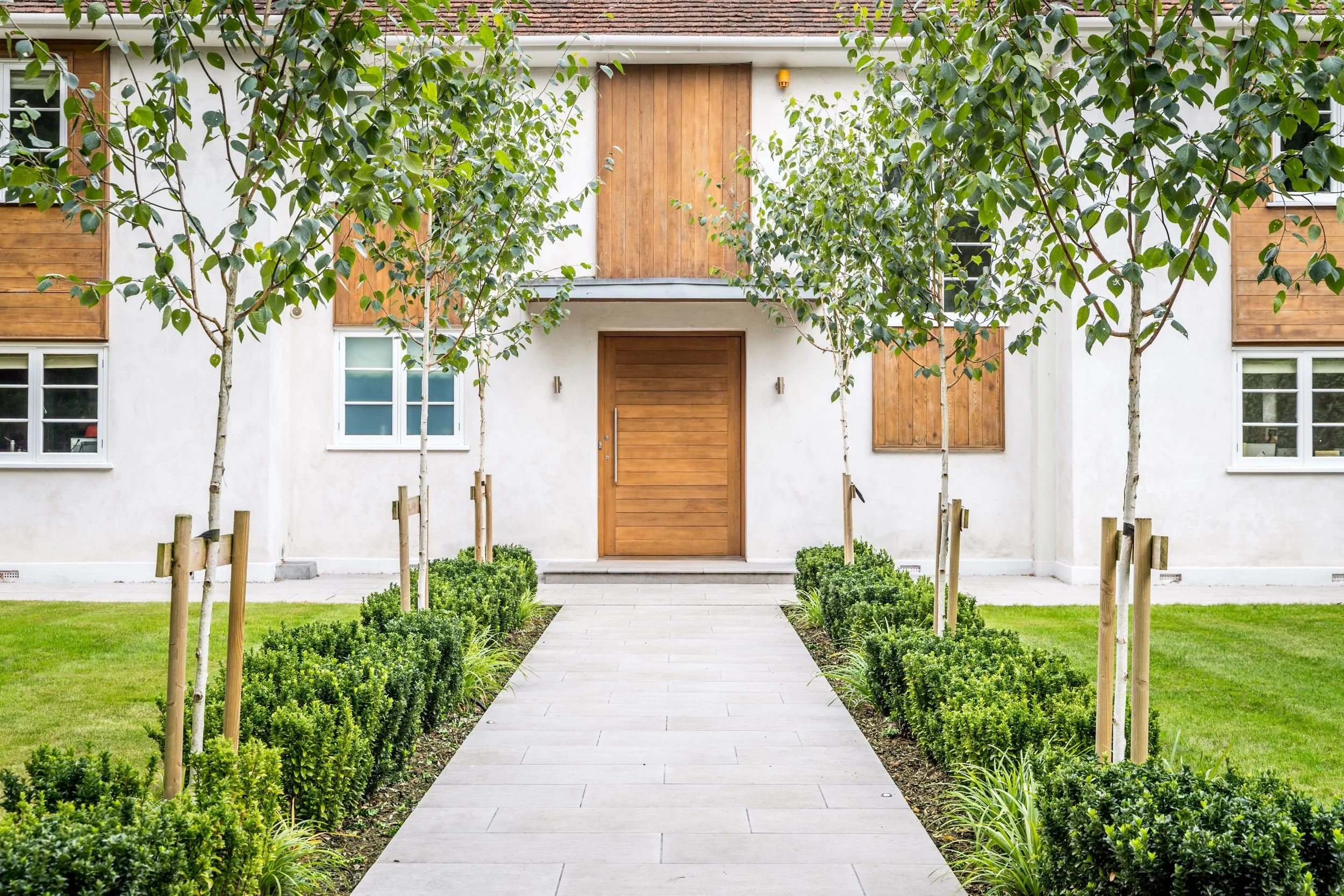
Decorbuddi Interior Designer: Amanda Delaney & Garden Designer Jo Connolly
Why Feng Shui Is Worth Considering When Designing Your Home
When designing a home, the conversation usually begins with aesthetics - materials, colour palettes, architectural details. But the homes that truly stand the test of time are not simply beautiful. They feel balanced. They flow effortlessly. They support the people living within them. This is where Feng Shui becomes relevant.
Often misunderstood, Feng Shui is not about decoration or symbolism. At its core, it is about spatial harmony - how layout, proportion, light and positioning influence how a home feels. The Bagua map offers a traditional framework through which a floorplan can be viewed, dividing it into nine life areas and encouraging a considered approach to how space supports different aspects of living.
When approached thoughtfully, Feng Shui aligns remarkably closely with the principles of interior design, achieving a beautiful, harmonious design.
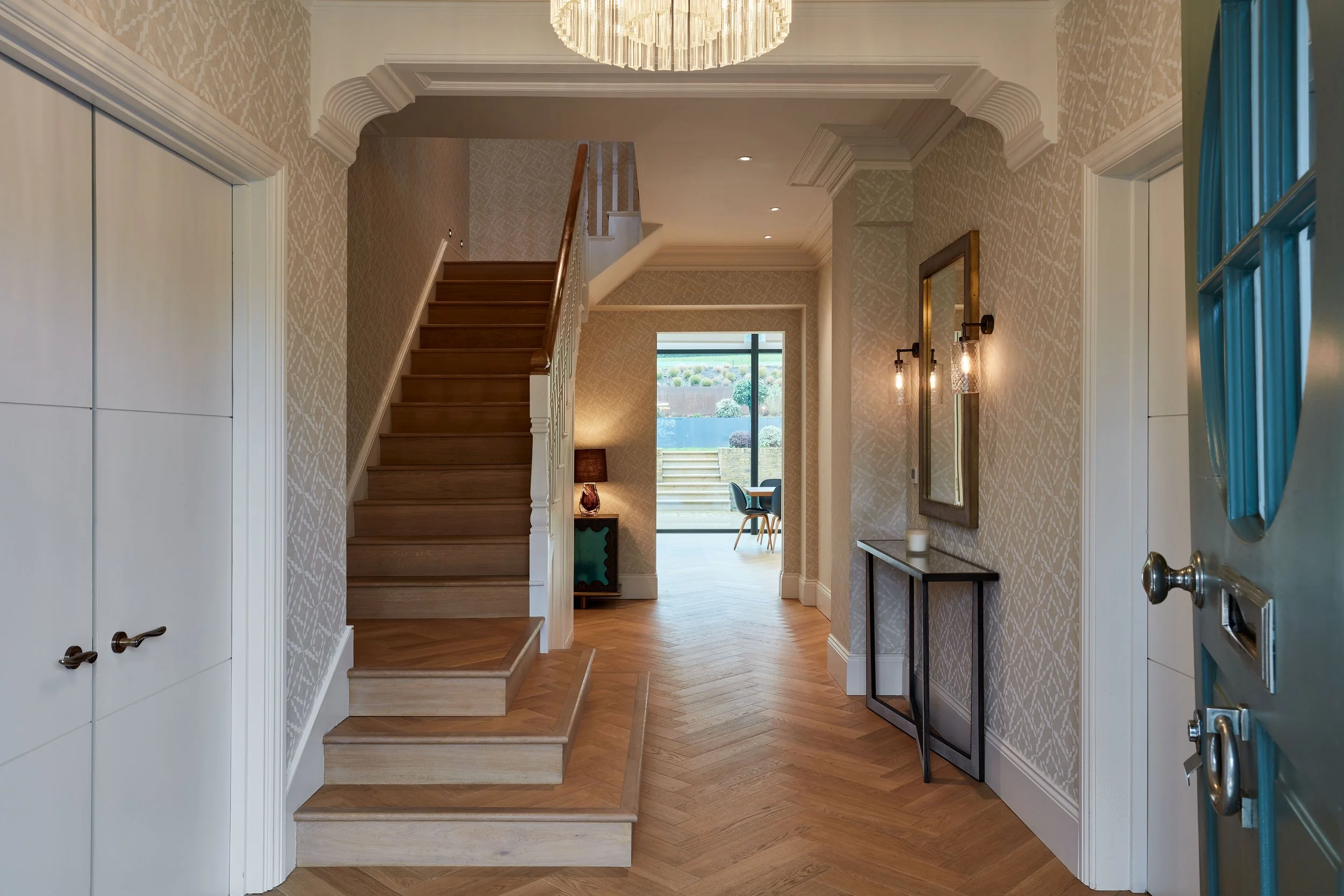
Decorbuddi Designer: Helene Dabrowski
The Importance of Flow
The entrance of a home quietly determines everything that follows.
In Feng Shui, it is considered the point where energy enters and begins to circulate. In interior design terms, it is where proportion, light and first impressions are established.
An open hallway with a clear view through to the garden creates a sense of expansiveness and ease. Natural light prevents heaviness. Thoughtfully positioned mirrors enhance brightness and depth. Clutter is removed. Even the presence of healthy planting contributes to vitality.
When a home begins with balance, the rest of the layout can unfold naturally.

Decorbuddi Designers: Ann Jackman & Alex Sherman
Spatial Intelligence in Kitchen Design
Feng Shui positions the kitchen towards the rear, rather than the centre of the house, in-keeping with the current western trend to connect interior and exterior spaces for wellbeing. Designed to enable the cook to face into the room, the kitchen layout works well for spatial flow and modern open-plan living.
The hob and sink are thoughtfully separated, creating a sense of equilibrium between elements. This separation reflects one of the core principles of Feng Shui - the balance of the five elements: fire, water, wood, earth and metal. Generous storage allows everyday necessities to be concealed.
These are not rigid rules, but principles that align closely with contemporary interior design practice: clear sightlines, considered positioning and an absence of visual clutter. The result is a kitchen that feels light, calm and spacious.

Decorbuddi Designer: David Massingham
Creating a Restorative Bedroom
A bedroom should feel protective and restorative.
In Feng Shui terms, the bedroom represents yin energy - quiet, soft and still, in contrast to the kitchen, which carries a more active, yang quality. Designing with this distinction in mind allows each space to support its intended rhythm.
Positioning the bed so it is not directly aligned with the door creates a subtle sense of security. Orientating it toward light strengthens the feeling of calm. Symmetry through matching bedside tables and lamps brings visual stability. Mirrors are placed thoughtfully, never reflecting the bed. Soft blues and greens - colours found in nature - encourage relaxation.
Aligning the principles of Feng Shui with exceptional interior design will achieve a good spatial design that supports rest and wellbeing.
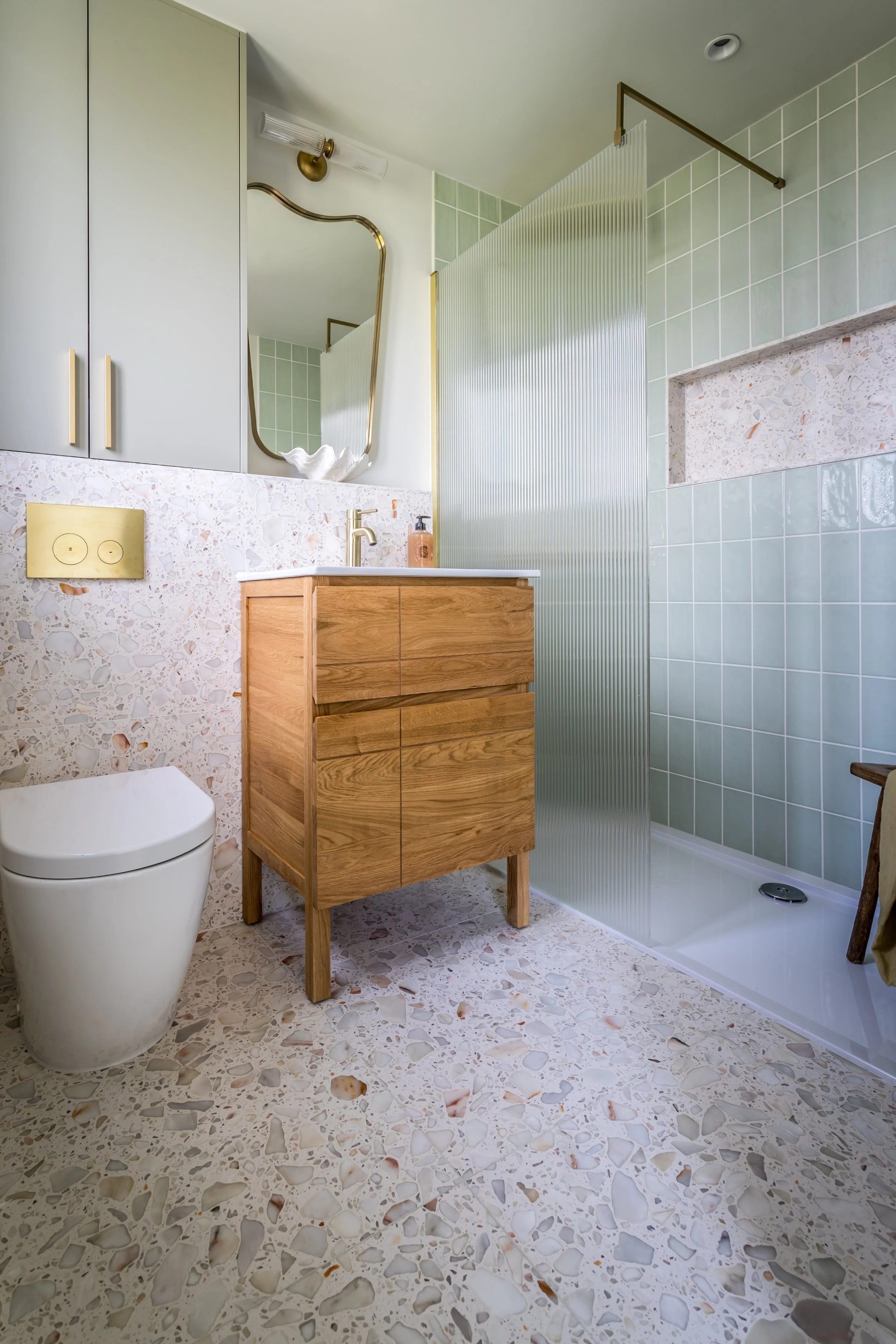

Material Balance in The Bathroom
Bathrooms are spaces defined by water and movement, and so balance becomes particularly important. In Feng Shui, they are often viewed as areas where energy can dissipate, which makes considered design and material choice all the more important.
In practical interior design terms, this translates to careful planning, especially in smaller bathrooms, where flow and proportion are essential. Circulation should feel effortless, storage should be integrated rather than added on, and surfaces should remain calm and uncluttered.
Natural materials play an important role. The introduction of timber - such as a wooden vanity - softens the presence of stone, porcelain and brass, bringing warmth and grounding to a room otherwise dominated by water. Soothing tones, particularly greens and muted blues, reinforce a sense of tranquillity. Mirrors are positioned thoughtfully to enhance light and space without creating visual tension.
Careful consideration of the key principles of Feng Shui and Interior Design will utilise colour & materials, light & space work to create an energising bathroom design.

Decorbuddi Designer Jo Connolly
The Architecture of The Garden
Feng Shui does not end at the back door. The garden is an extension of the home’s energy and atmosphere, and its design can influence the sense of balance within the interior just as much as any room.
Timber fencing and natural boundaries introduce warmth and a sense of growth. Healthy, abundant planting brings vitality, while avoiding overly aggressive or spiked forms helps maintain softness. The considered use of metal elements, such as planters or sculptural detailing, adds contrast and creative energy without overpowering the space.
Simplicity is often the most powerful design. When pathways are clear and the layout is restrained, movement through the garden feels intuitive and unforced. In much the same way as within the home, harmony is achieved not through excess, but through balance, allowing the space to feel open and quietly composed.

Decorbuddi Interior Designer Laura Nicolson
“ Woven into a professionally designed home, Feng Shui reinforces what thoughtful interior design also strives to achieve - balance, flow and harmony. It invites design to be considered at a deeper level, supporting not only the aesthetic, but a sense of security, wellbeing and quiet prosperity. ”
For More Inspiration visit the Decorbuddi Gallery, Stories from Our Projects or please do not hesitate to get in touch with Our Experts
If you’re planning a full-home renovation please do get in touch.
Photography Credits: KT1 Photography, Chris Snook and Limelight Photography