
Tania Johnson Design: Bespoke Rugs for Individual Interiors

Makers Insights
This Decorbuddi Makers Insight is part of our series celebrating the remarkable specialist partners whose skills, knowledge and original designs help us to create beautiful, individual homes and gardens for our clients. From one-of-a-kind furniture and lighting to bespoke rugs made using centuries-old techniques, these are the inspirational creators making a real difference to the way we live.
A Rug Designed for the Interior
A rug is often described as the finishing touch to a room, but in our experience the most successful rugs are considered much earlier.
Its size can influence how the furniture is arranged. Its shape can respond to the architecture of the room, define a seating or dining area and help a large open-plan space feel more intimate. Its colour and texture can connect the flooring, upholstery, curtains, artwork and joinery, giving the whole interior a greater sense of cohesion.
Standard sizes, shapes and colourways do not always provide the right answer, particularly in a complex residential project where the room or furniture may have unusual proportions. This is where working with a specialist rug designer can make a significant difference.
British textile designer Tania Johnson creates bespoke rugs that combine original artistic ideas with extraordinary craftsmanship. Every design can be adapted to respond to the scale, palette and practical requirements of an individual interior.

Inspired by Nature
Tania’s distinctive rug designs begin with photographs she has taken herself. She is particularly drawn to the natural world and the fleeting effects created by water, light, shadows and reflections: the veins of a leaf seen close up, trees reflected on the surface of a lake or the changing patterns created by sunlight. Every rug design begins with an inspiring moment captured by her lens.
These images are not reproduced literally. Tania isolates their lines, textures and tonal variations and develops them into designs that often appear abstract at first glance. It is only on closer inspection that their relationship with nature becomes apparent.
The result is a collection of contemporary rugs that can introduce pattern without overwhelming a room. Some are quiet and ethereal, while others use stronger colour or more graphic forms, but each has a sense of depth and movement that changes subtly with the light.
From Textile Design to Bespoke Rugs
Tania studied woven textiles at the Royal College of Art before working at a weaving mill in Switzerland. She later moved to New York, where she lived for 12 years and worked as a textile designer for Calvin Klein Home, designing the brand’s first rug collection in 2002.
After establishing her own textile consultancy and working with several high-end American brands, Tania launched her first collection of hand-knotted rugs under the Tania Johnson Design name in New York in 2010. She returned to the UK the following year and now works from her studio in Twickenham.
Her grounding in woven textiles is central to the way she works. Tania is not simply creating a surface pattern and passing it to a manufacturer. She understands how the design will be interpreted in yarn and personally produces the detailed weaving graph for every hand-knotted rug.
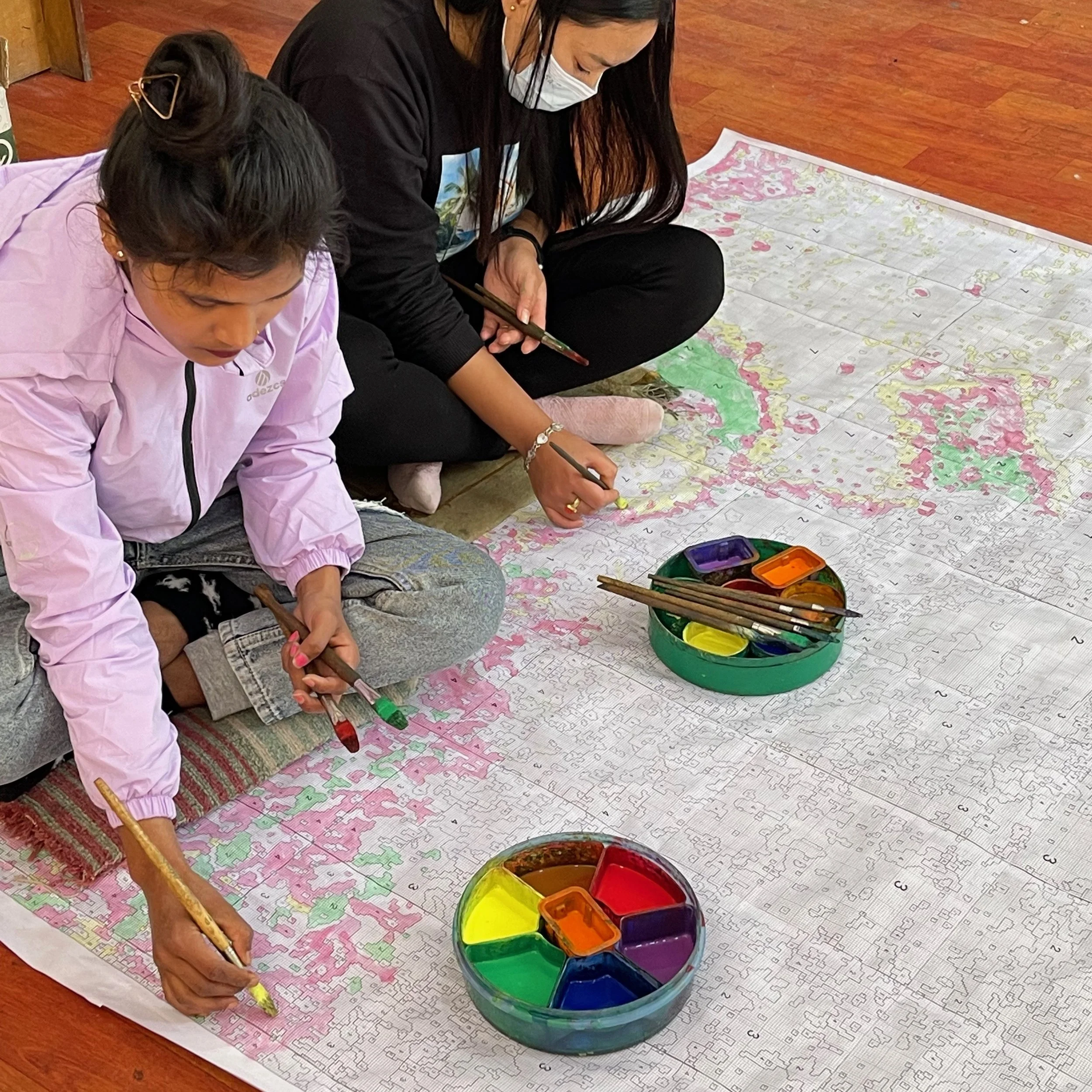
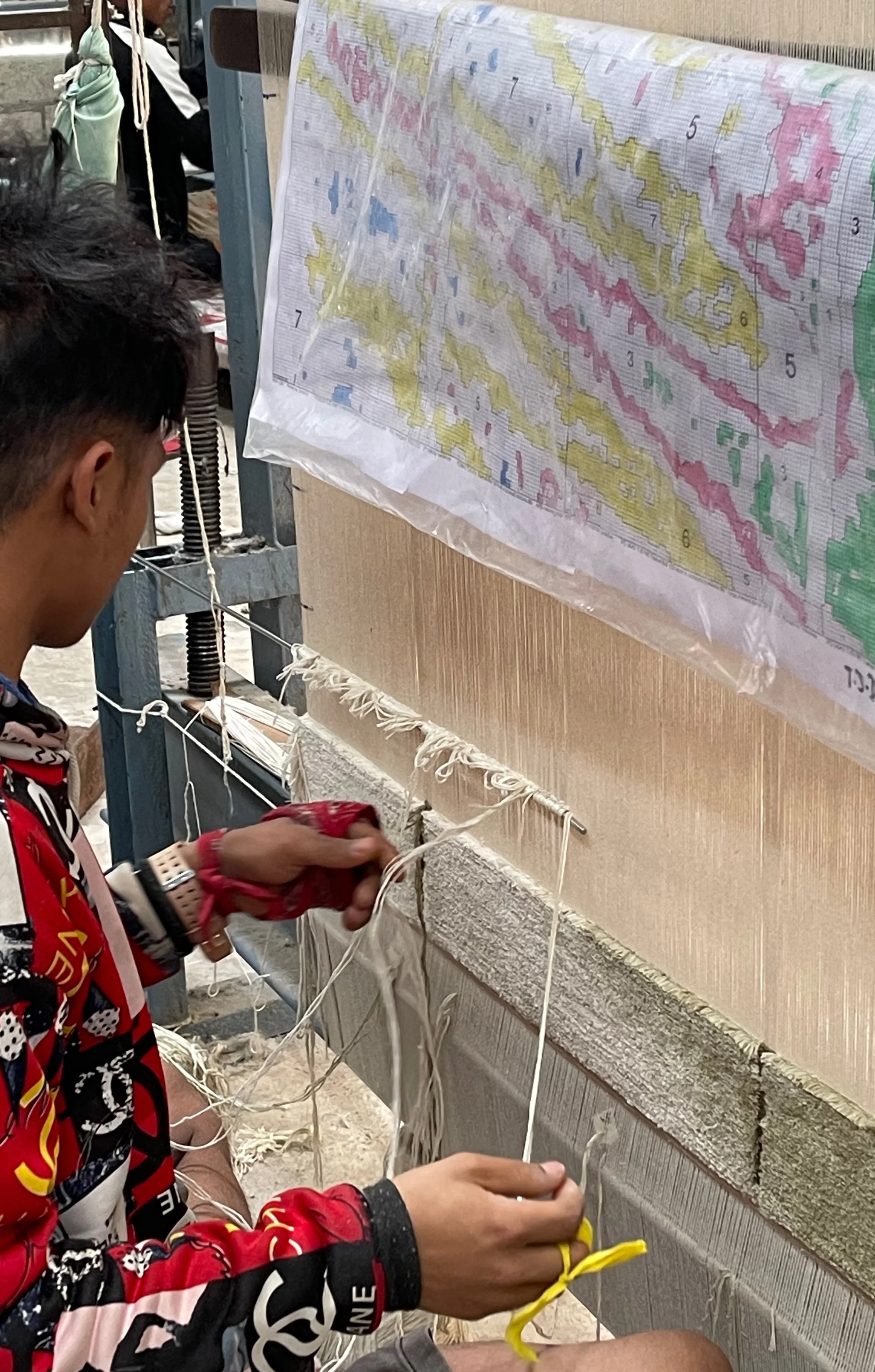
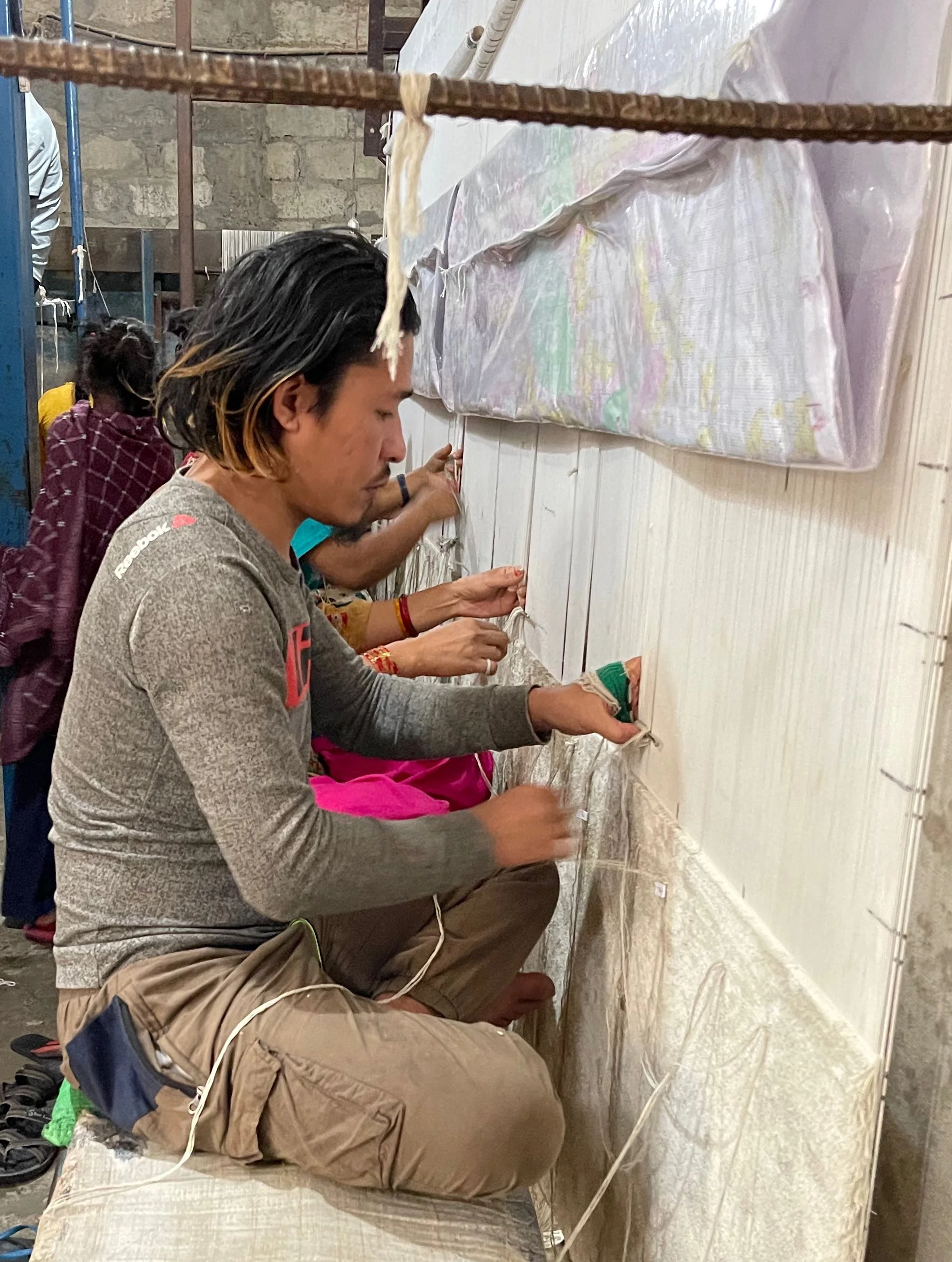
Each square on the graph represents a single knot. The completed graph is sent to the mill in Kathmandu, where it is printed and every colour position is painted by hand before being attached above the loom for the weavers to follow. Designs with very close tonal variations or particularly intricate details require exceptional accuracy and skill.
Hand-Knotted, Handloom or Flatweave?
One of the first decisions when commissioning a bespoke rug is how it should be made. The right construction depends on the design, the intended use of the room, the desired texture and the available budget.
Hand-knotted rugs
Hand-knotting allows the greatest freedom to create intricate patterns, close tonal changes and fine details. Tania’s signature hand-knotted rugs are generally produced in wool and silk, with the wool providing resilience and the silk catching the light to accentuate particular areas of the design.
The knot count may vary according to the intricacy and scale of the piece. A detailed design produced at a relatively small size may require finer yarn and a higher number of knots to retain its definition.
Hand-knotted rugs are the most time-consuming to make and are particularly suited to important living rooms, bedrooms and spaces where the rug is intended to become a lasting part of the interior.
Handloom rugs
Handloom rugs are also handmade but are woven more quickly using a shuttle loom. The technique lends itself to simpler designs, gentle gradations of colour, stripes and subtle variations in texture.
Carving, cut-and-loop techniques and changes within the yarn can be used to add depth, making a handloom rug a good choice where a quieter or more understated result is required.
Flatweave rugs
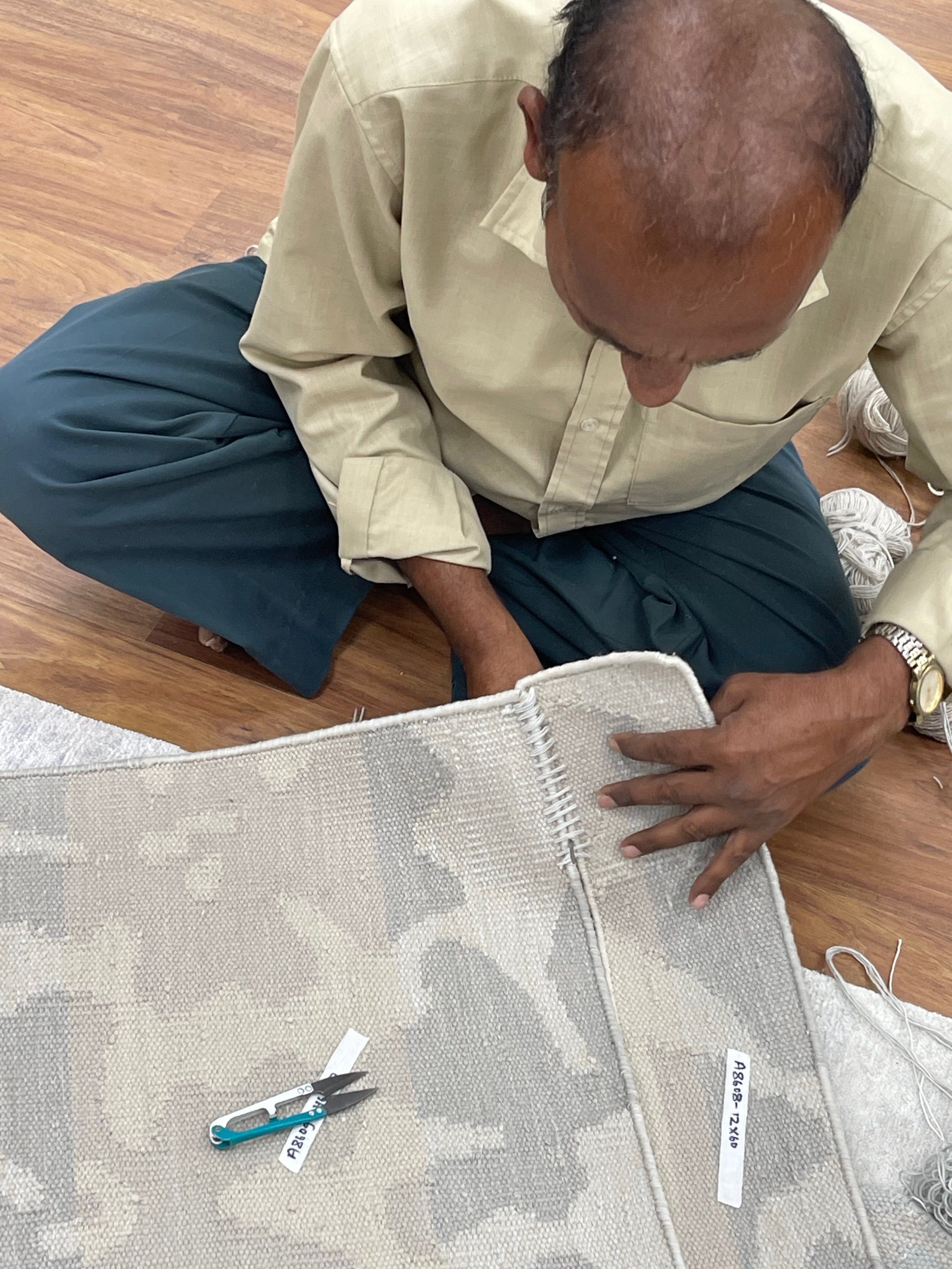
Flatweaves have a lower profile and a more relaxed character. Some of Tania’s designs are woven as individual strips that are then carefully hand-stitched together, while others incorporate graduated or space-dyed yarns.
They can work particularly well in informal interiors, hallways and second homes, or where a lower pile is needed beneath doors or furniture. They are generally quicker to produce than a hand-knotted rug while still offering the flexibility to customise the colours, dimensions and shape.Finding the Right Size
A rug that is too small can make the furniture appear disconnected and the room feel less generous than it really is.
Where the layout and budget allow, placing all the principal living-room furniture on the rug creates a particularly calm and cohesive arrangement. In other rooms, positioning the front legs of the sofas and chairs on it may connect the furniture successfully without requiring such a large piece.
The rug must also be considered in relation to the architecture and circulation of the room. Door openings, fireplaces, floor sockets and the principal routes through the space should all be checked before its dimensions are agreed.
In an open-plan interior, a rug can establish the boundary of a seating or dining area without interrupting the wider sense of space. This is one of the reasons why we prefer to consider an important rug while developing the furniture plan rather than waiting until the final styling stage.

Rugs for Dining Rooms and Bedrooms
A rug beneath a dining table can add warmth, soften the acoustics and give the dining area greater presence, but its size and construction need to be carefully planned.
It should extend far enough beyond the table for the chairs to remain on the rug when they are pulled out. Its shape will usually relate to the table, although it need not be a standard rectangle or exact oval. Tania has created rugs using full-size templates to follow the precise outline of individually designed tables.
The materials also matter. For a frequently used dining room, a wool-rich rug with a relatively low pile may be more practical than one containing a high proportion of silk. The movement of the chairs, the position of nearby doors and the way the family uses the room should all inform the final specification.
In a bedroom, a rug may sit beneath the whole bed and bedside tables, extend from the lower part of the bed or be divided into two coordinated runners. The right arrangement depends on the proportions of the room and where softness underfoot will make the greatest difference.
Custom Shapes for Individual Homes
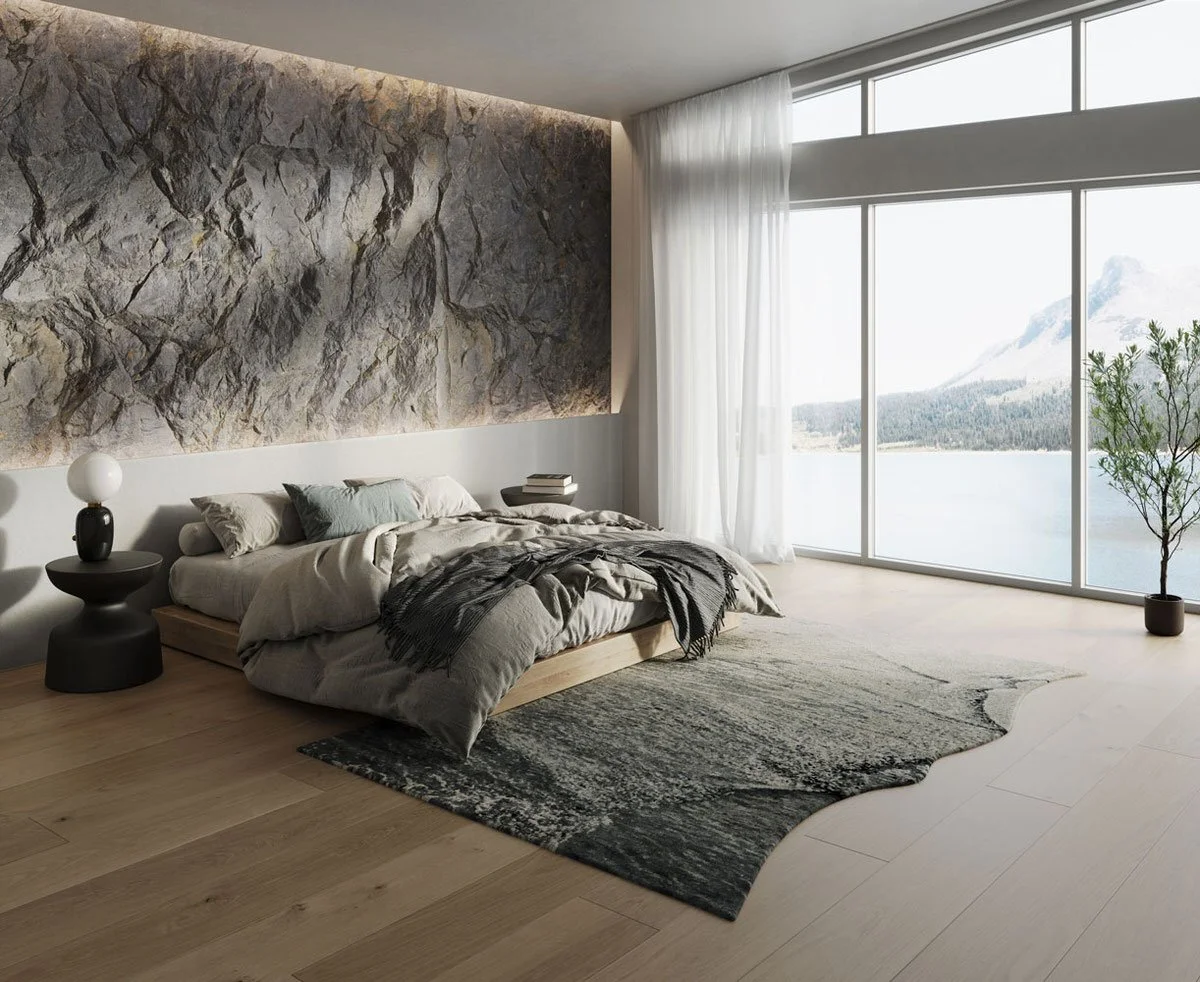
The growing use of curved sofas, sculptural furniture and more fluid room layouts has increased demand for rugs that are not simply rectangular.
A bespoke rug might follow the curve of a sofa, echo the outline of a table or respond to an angled wall, bay window or staircase. For more unusual shapes, a full-size template can be created and sent to the mill so that the rug is woven to the exact dimensions required.
Tania has also created entrance rugs, hallway runners and complex stair runners, including one designed for a large curved double staircase in an American home.
In a Decorbuddi project in Wimbledon, coordinated rugs were used at the entrance and in the adjoining hallway. Their colours were different but carefully related, introducing brightness and giving each part of the circulation space its own identity while retaining a connection between them.
Choosing Colour and Materials
As Tania’s rugs are made to order, an existing design can be resized, reshaped and recoloured to complement the interior.
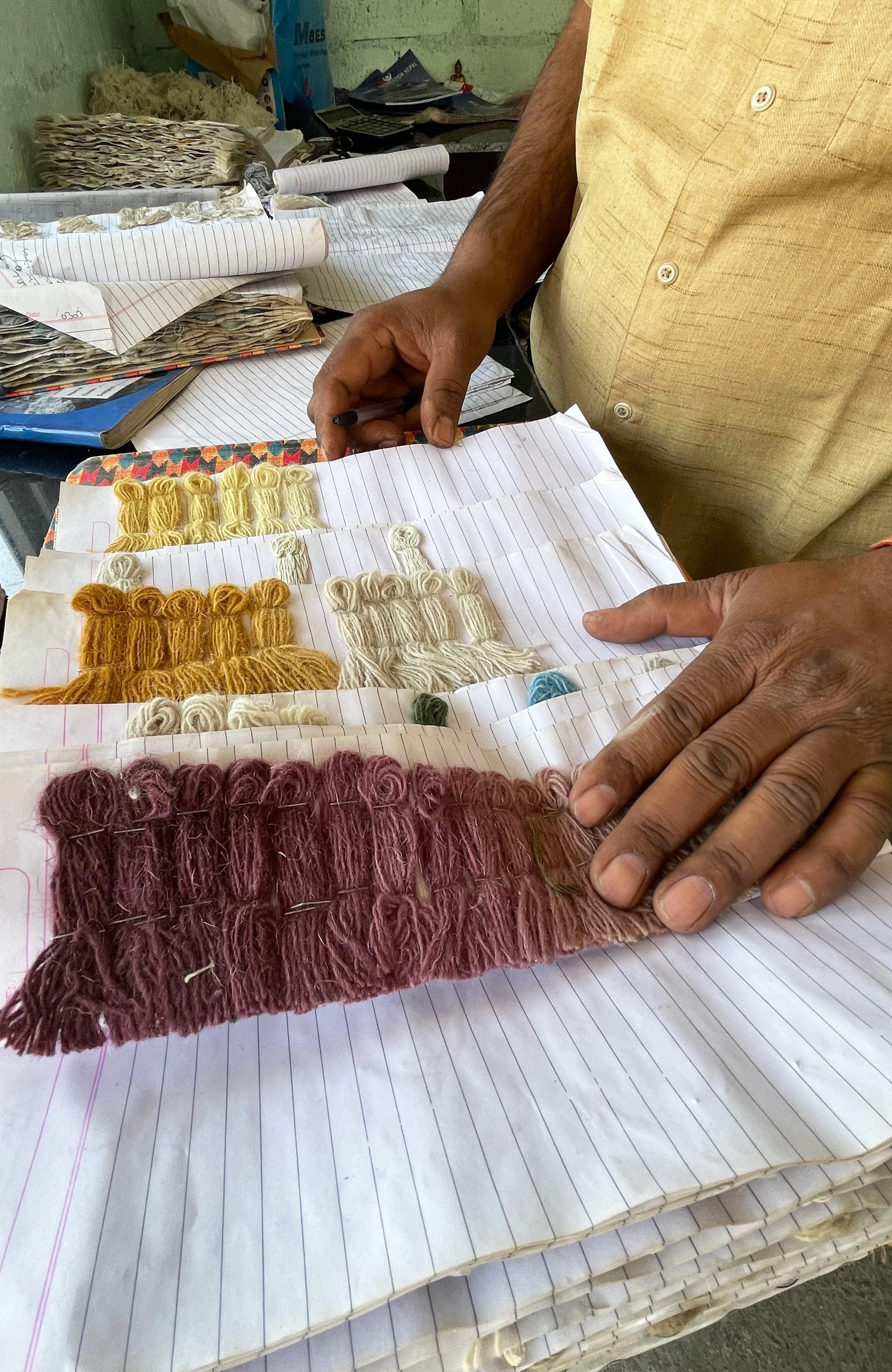
The process may begin with a digital visualisation showing the design in a different palette. A yarn card can then bring together the proposed colours before a woven sample is commissioned.
Sampling is particularly important where a design includes very close tonal shades or silk. The colours, texture and reflection of the fibres may look quite different depending on the natural and artificial light within the room.
Tania holds rugs, samples, yarns and colour poms at her Twickenham studio. Depending on the location of the project, clients can visit the studio or review samples at home. Complete rugs can sometimes also be loaned so that their design and scale can be assessed within the actual space.
For us, the aim is not simply to match the rug to a cushion or paint colour. We consider how it will sit against the flooring, whether the pattern will complement the upholstery and curtains, how its texture will relate to the other materials and how its colours will respond to the changing light throughout the day.
Handmade in Nepal
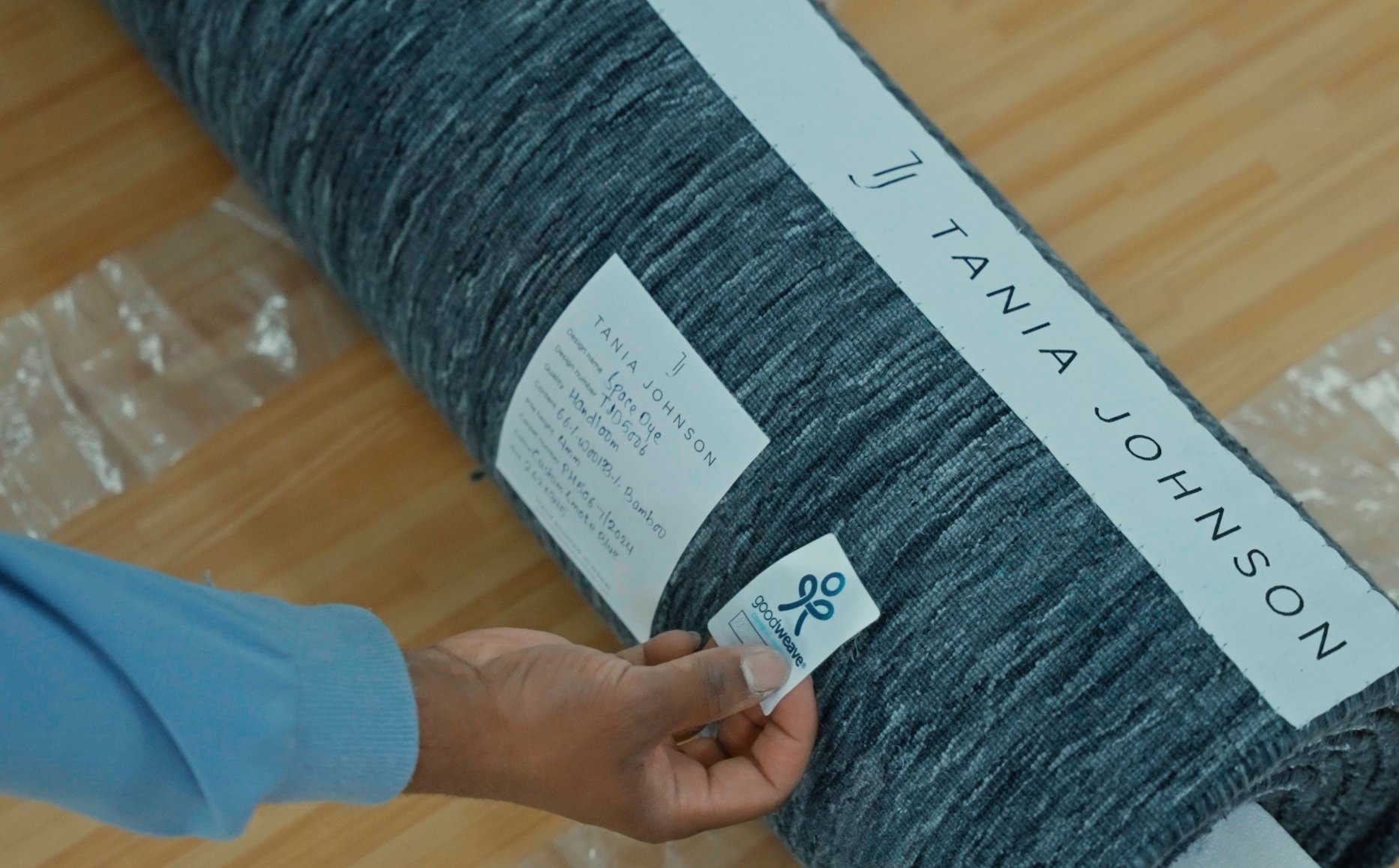
All Tania Johnson rugs are handmade in Nepal by a manufacturer she has worked with since establishing the business.
When Tania first began looking for a production partner, she contacted a selection of GoodWeave-certified factories and asked each of them to reproduce one of her most difficult designs. She then visited the factories that were able to weave it successfully before selecting the manufacturer whose skills and values most closely matched her own.
That relationship has developed over many years. Tania knows the family behind the mill, visits Kathmandu regularly and works closely with the makers during the production of each rug.
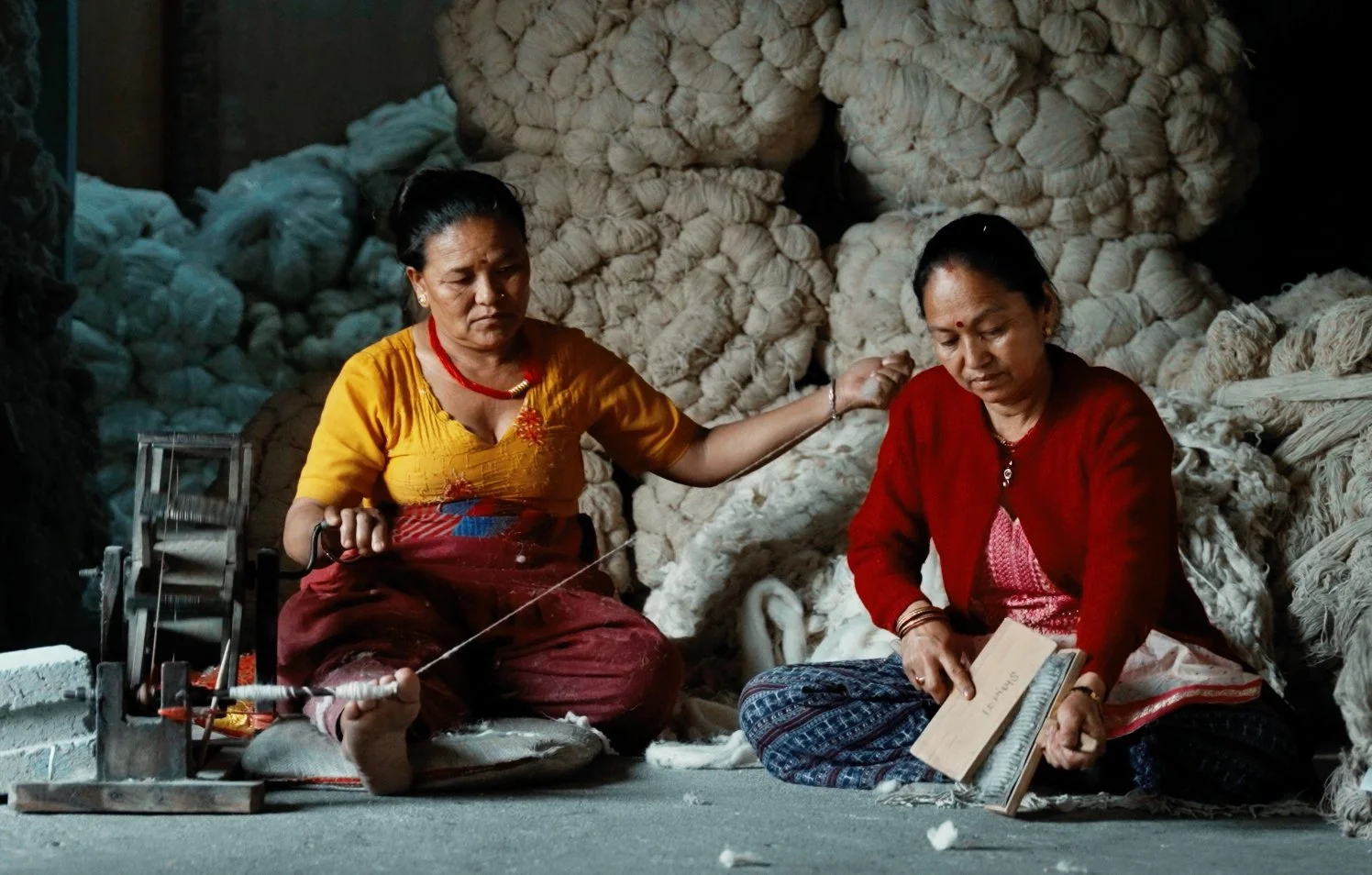
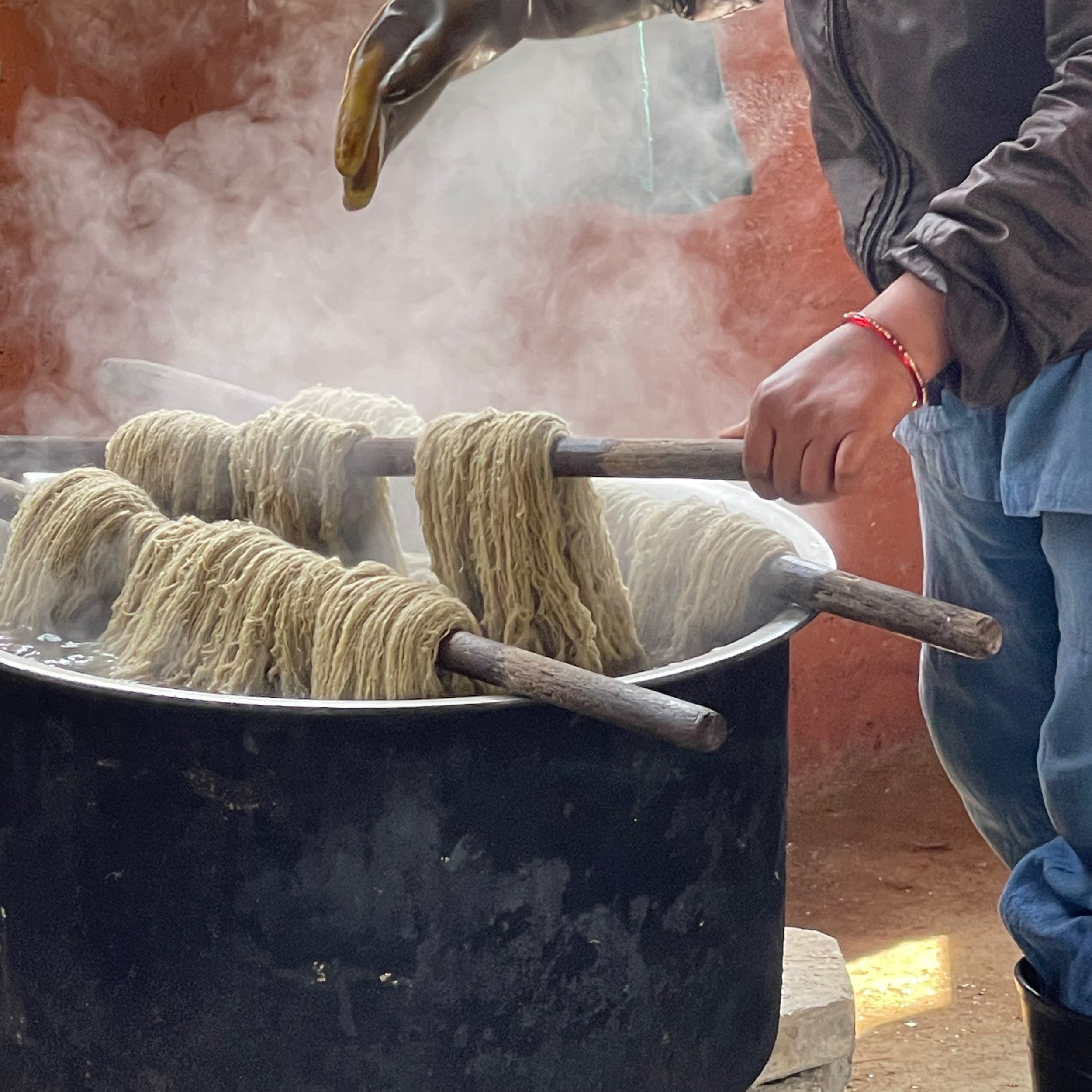
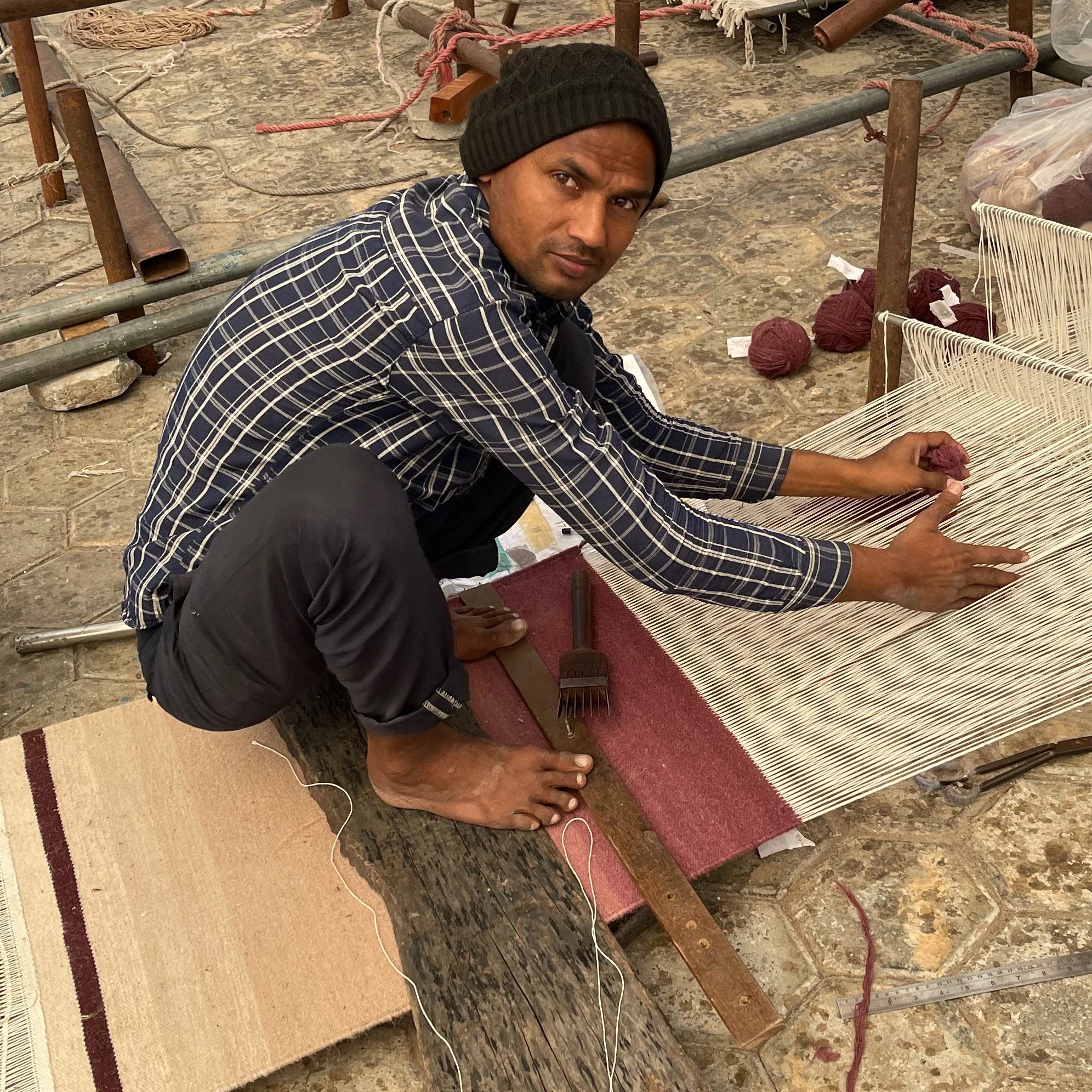
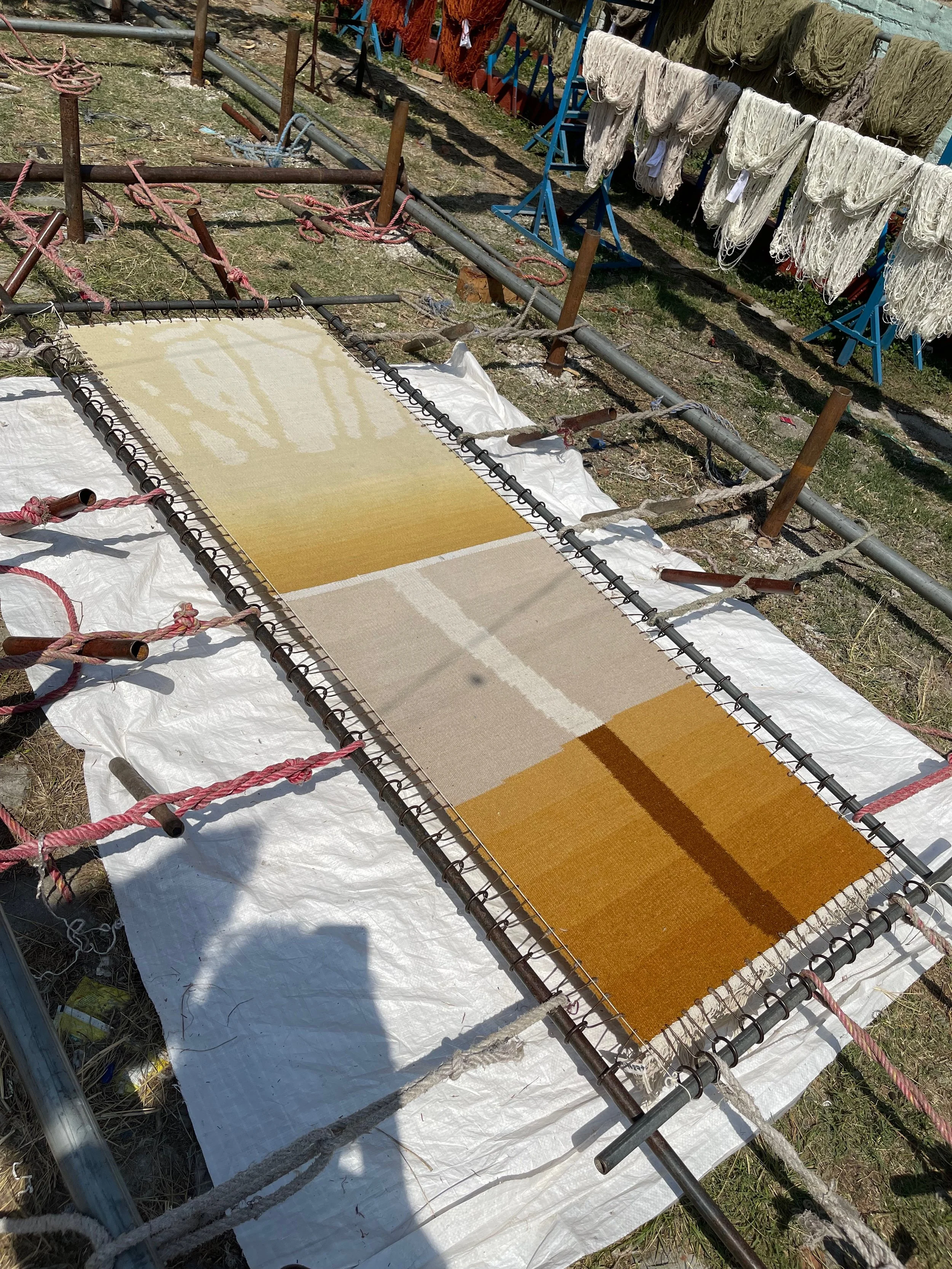
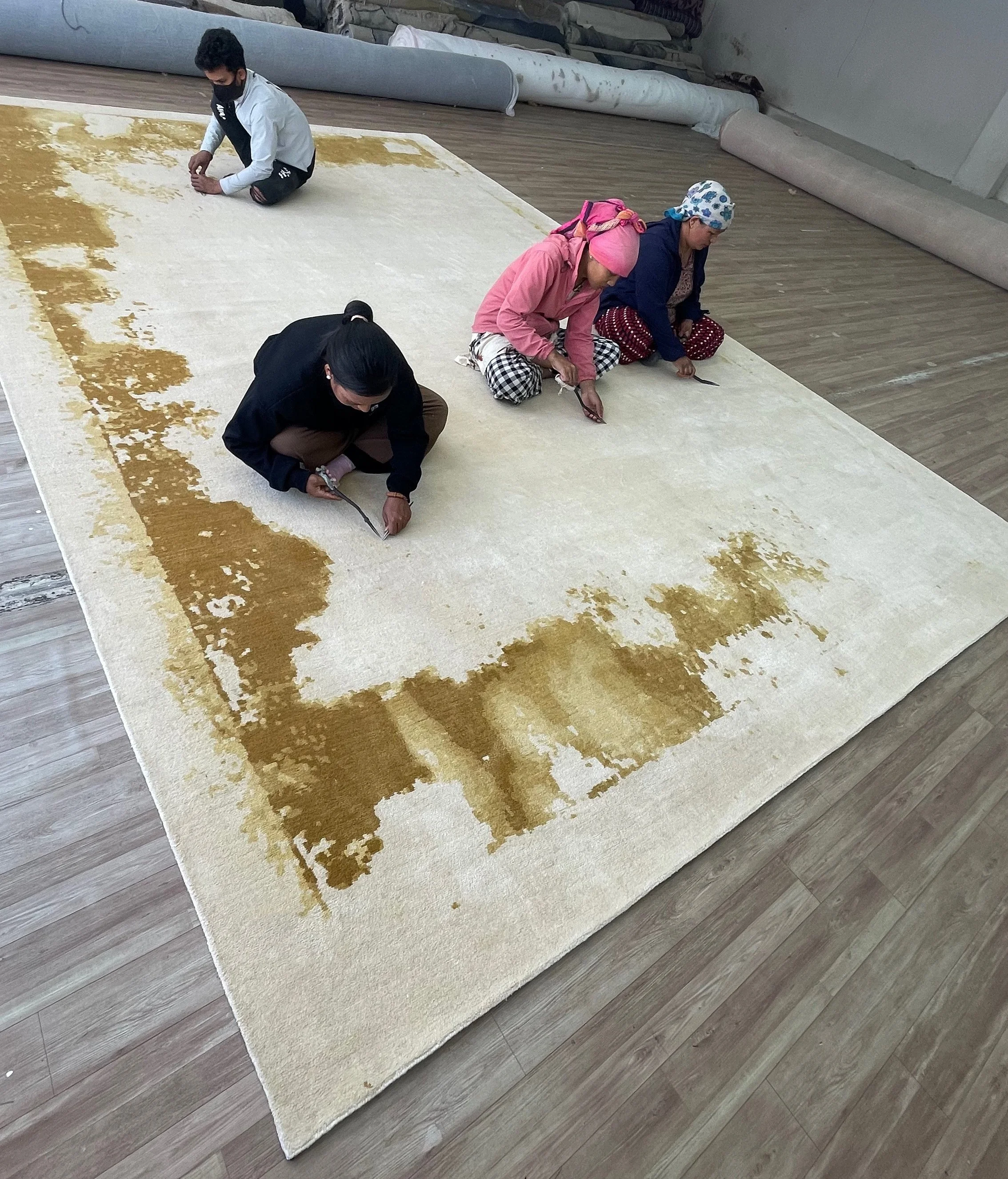
The making process involves far more than weaving. The raw Himalayan wool is carded and spun by hand before the yarn is dyed and dried in the sun. Preparing the loom can take several days, and particularly large rugs may require a completely custom-built loom and numerous weavers working side by side.
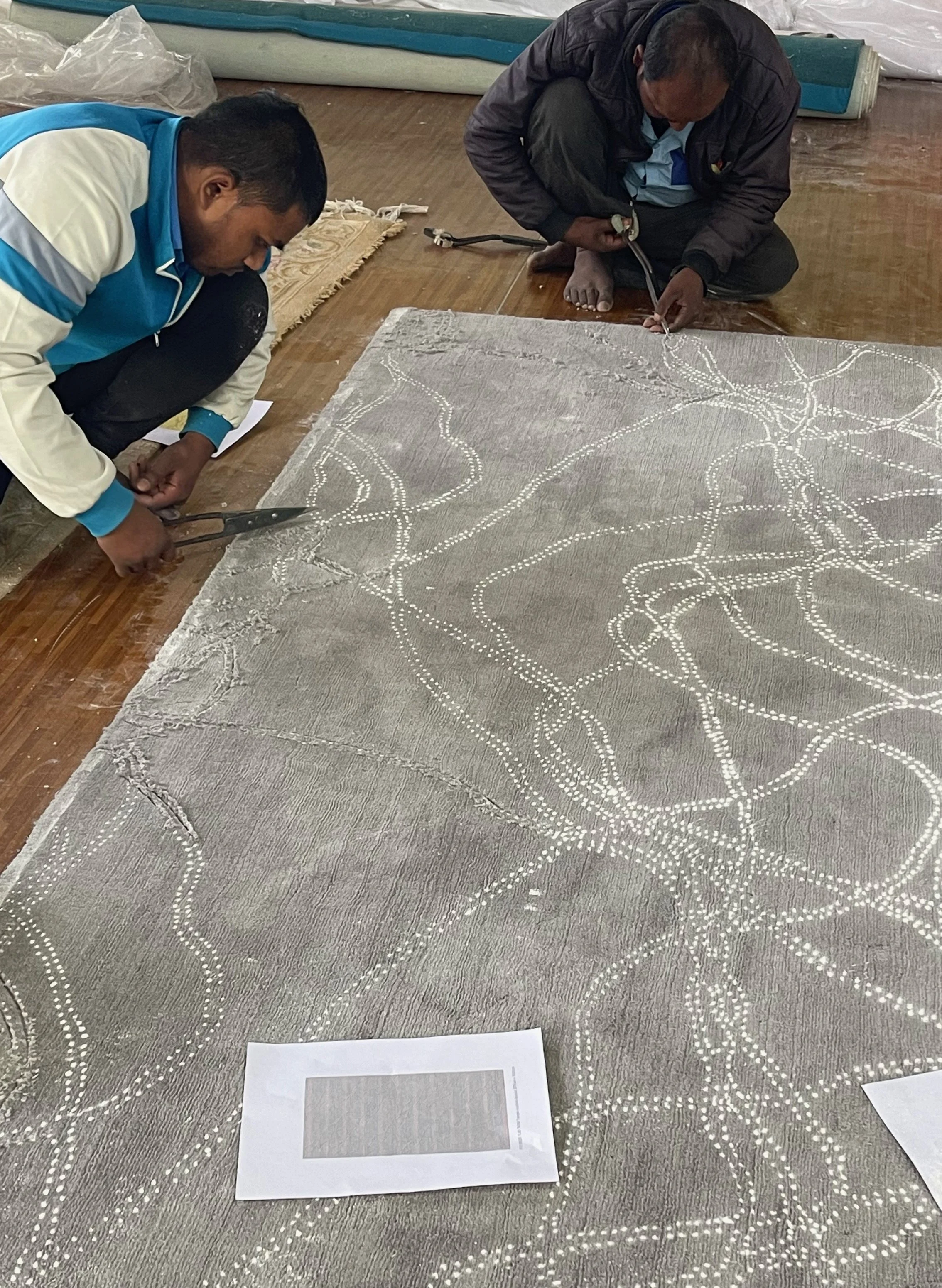
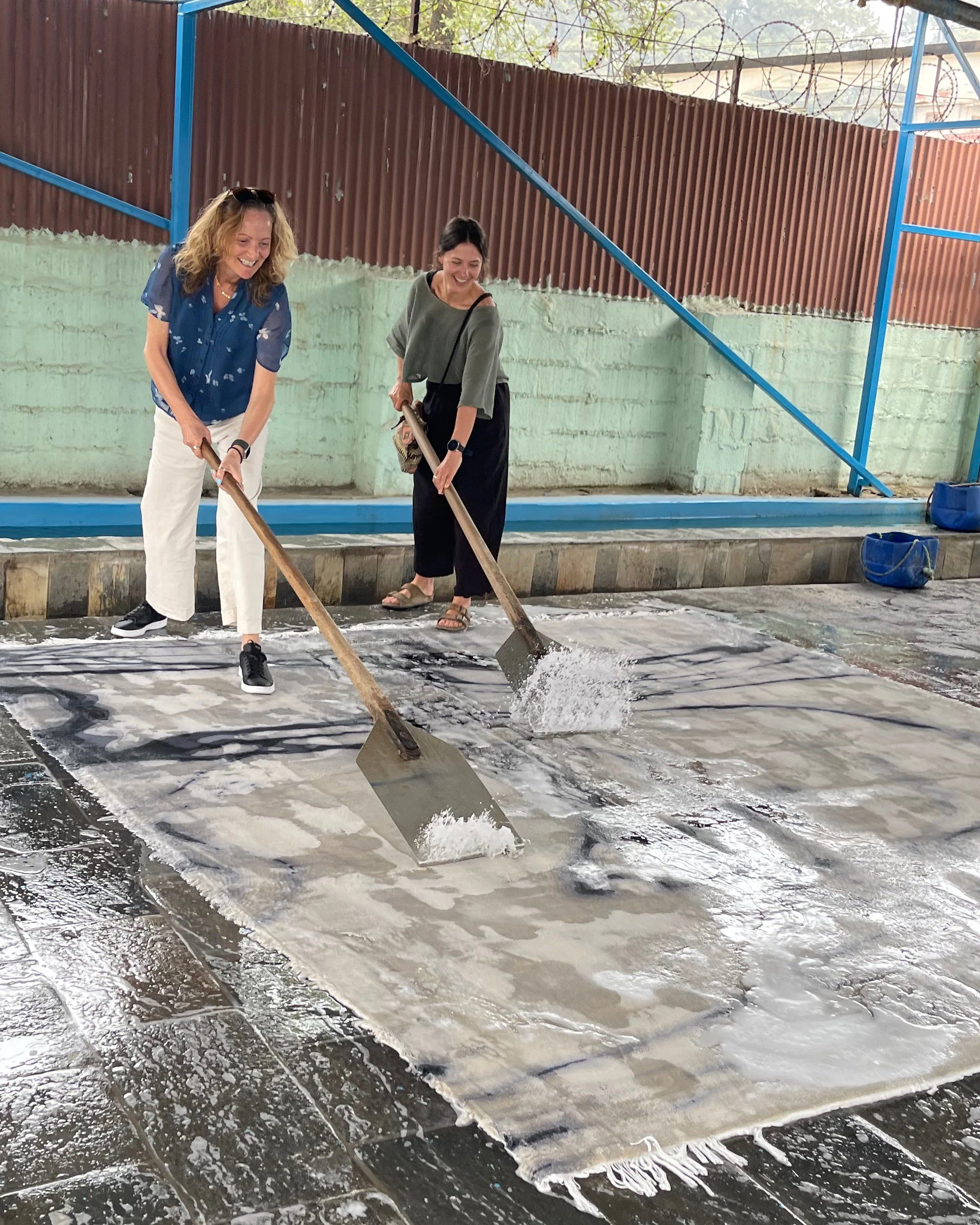
Once woven, the rug is trimmed, washed by hand, stretched and laid out to dry. Its edges are then bound before it receives a final trim and inspection prior to shipping.
All Tania Johnson rugs are GoodWeave certified. GoodWeave works to prevent child labour and improve working conditions for adults within rug-producing communities. Tania has supported the organisation since forming her business and has visited its Hamro Ghar rehabilitation centre in Kathmandu.
An International Rug Design Business
Tania Johnson Design has an established international client base across America, Europe and the Middle East, with a growing clientele in France and Switzerland, including Geneva.
This international experience is particularly valuable for clients furnishing second homes or managing residential projects across borders. Designs, dimensions and colours can be developed collaboratively, samples reviewed before production and the completed rug delivered to the property as part of the wider installation programme.
This complements Decorbuddi’s own experience of working with international clients, whether they are renovating a UK property from overseas or creating a home elsewhere in Europe.
A successful international commission depends on far more than choosing a beautiful design. Measurements, sampling, lead times, shipping, receiving, inspection and installation all need to be coordinated with the furniture, decorating and completion of the wider interior.

Planning a Bespoke Rug into a Residential Project
A handmade rug takes time. Depending on its size, knot count and complexity, the lead time from order to delivery can be between three and nine months. Photographs can be provided during production, offering a fascinating record of the rug as it gradually takes shape.
For a Decorbuddi project, this means identifying the requirement for a bespoke rug early enough to incorporate it into the overall design and implementation programme.
Our role may include establishing the appropriate dimensions from the furniture plan, reviewing the most suitable construction and materials, developing the colour palette with Tania, arranging samples and coordinating the order with the other elements of the interior.
By treating the rug as an integral part of the room rather than a late addition, we can ensure that its scale, design and texture contribute to the complete scheme.
Tania Johnson’s work brings together photography, technical textile knowledge, contemporary design and traditional Nepalese craftsmanship. The result is a rug made for everyday life, but individual and beautifully produced enough to be enjoyed for generations.
For More Inspiration visit the Decorbuddi Gallery, Stories from Our Projects or please do not hesitate to get in touch with Our Experts