Drought-resistant garden design: Creating a garden for hotter, drier summers
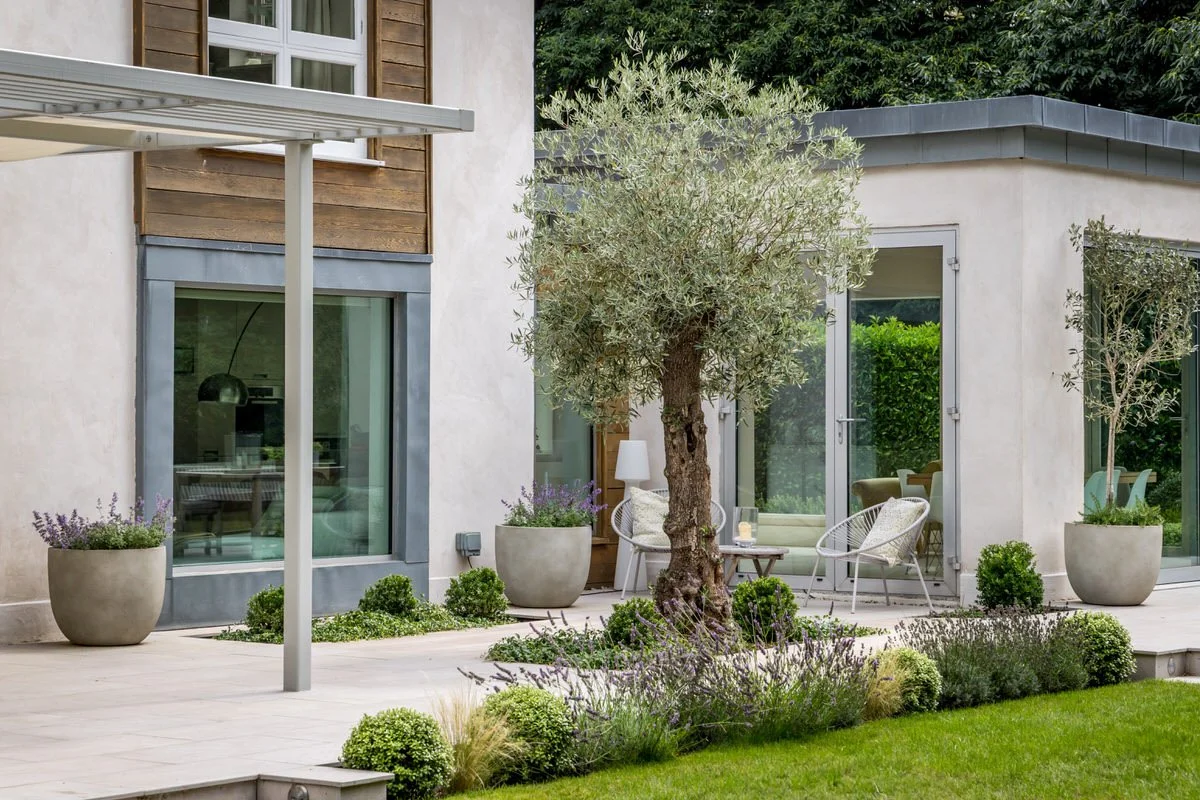
Hotter, drier summers are changing some of the decisions we make when designing gardens in the UK. A drought-resistant garden is not simply about choosing plants that need less water. The position of those plants, the condition and drainage of the soil, irrigation and the overall planting scheme all play an important role.
For our garden designers at Decorbuddi, the starting point is the individual garden. We consider its aspect, existing soil, areas of sun and shade and how the client wants the garden to look and feel throughout the year. From there, we can develop a planting scheme that is appropriate for the conditions, while still providing the colour, structure and seasonal interest the client would like.
What makes a garden drought resistant?
Good drought-resistant garden design starts below ground.
Preparing planting beds properly is important for any garden, but particularly when introducing plants chosen for drier conditions. Planting into poor soil, or soil that is unsuitable for a particular species, can prevent plants from establishing and thriving.
Drainage also needs careful consideration. Although drought-tolerant planting is chosen to cope with periods of dry weather, many of these plants still require good drainage through the wetter UK winter. If their roots are left sitting in water for extended periods, they can rot and the plant may fail.
We therefore look at the conditions across the whole garden rather than selecting plants in isolation. Good planting practice includes preparing the ground, creating an appropriately sized planting hole, providing the right soil conditions and positioning the root ball at the correct height.
It is the combination of plant selection and good groundwork that gives a planting scheme the best opportunity to establish successfully.
Do drought-tolerant plants still need watering?
Drought tolerant does not mean that a plant never needs to be watered.
This is particularly important when a garden has only recently been planted. Until their root systems are properly established, plants need regular moisture around their root balls. Allowing them to heat up and completely dry out for extended periods can result in plants struggling or dying before they have had the opportunity to establish.
For some garden design projects, we recommend installing drip irrigation. This delivers water directly to the root area, helping to use water efficiently and reducing the risk of plants drying out during hot periods, particularly when clients are away during the summer.
Mulching is another useful consideration within the planting design. A suitable mulch helps protect the soil and plant roots from heating up and drying out as quickly in hot weather.
Are all drought-tolerant plants suitable for a dry garden?
Not necessarily. Even plants commonly described as drought tolerant need to be considered in relation to the specific conditions in the garden.
Plants with larger, softer leaves and larger flowers can sometimes require more water. Certain salvias, or flowering sage, and Alchemilla mollis, commonly known as lady’s mantle, are examples.
That does not automatically mean we would discount them. Positioning can make a significant difference. Placing more vulnerable plants where they receive some afternoon shade rather than full sun, together with providing additional water when required, can help them cope better during periods of hot weather.
When watering is needed, the timing matters too. Early morning or evening watering avoids the hottest part of the day and allows water to reach the roots more effectively.
This is where designing for the particular garden becomes more valuable than working from a standard list of supposedly drought-resistant plants.
What can you plant instead of hydrangeas in a dry garden?
Hydrangeas are a much-loved feature in British gardens, but they can struggle during particularly hot and dry summers. Their leaves and flowers can droop and wilt, and they may require more frequent watering to continue looking their best.
If a client likes the presence that a hydrangea brings to a border but their garden conditions are unlikely to suit one, we can consider alternatives.
Depending on the position and the size and character of shrub required, options might include:
Azaleas
Viburnums
Ceanothus, or Californian lilac
Skimmias
Spiraeas
Plant selection should always be specific to the site. Rather than substituting one plant for another purely because they look similar, we consider the soil, light levels, available space and the surrounding planting before deciding what will work best.
How do you create a drought-resistant garden with year-round interest?
One concern clients can have about a dry or drought-resistant planting scheme is how it will look outside the summer months.
This is something we consider from the beginning of the design.
A number of plants suitable for drought-conscious planting are evergreen and can provide useful structure throughout the year. Depending on the conditions in the garden, these might include olives, rosemary and other hardy herbs, lavender, viburnum, photinia, vinca, abelia and star jasmine.
We then build around this evergreen framework with grasses, flowering plants and perennials.
Not everything needs to be cut back as soon as flowering has finished. Many grasses and deciduous flowering plants can remain through winter. Their stems and seed heads create texture and structure during the colder months, while also offering additional habitat and food for insects and birds. They can then be cut back or pruned in early spring as new growth begins to emerge.
Combining plants that behave differently throughout the seasons means the garden is never dependent on one short period of flowering to create interest.
What does a drought-resistant garden look like in winter?
February is a useful test of a planting scheme.
By this point, summer flowers are long gone and many perennials have died back completely. When we design a garden, we think about what will remain.
Evergreen planting provides the underlying framework, while grasses, seed heads and architectural plants can retain shape and texture. Plants that disappear over winter can then sit within this stronger structure and re-emerge as the seasons change.
Lighting can also become an important part of the garden design at this time of year. Carefully positioned garden lighting can highlight architectural plants and trees during the darker months, creating interesting views from inside the house as well as within the garden itself.
The aim is not for the garden to look the same in February as it does in June. It is to make sure it has enough structure and interest for each season to have its own character.
Designing a garden for changing UK summers
Creating a garden that copes well with periods of hot, dry weather requires more than replacing thirsty plants with drought-tolerant varieties.
Successful schemes consider where each plant will sit, how much sunlight it receives, the condition and drainage of the soil, how the plants will be watered while becoming established and what the garden will look like throughout the seasons.
For our Decorbuddi garden designers, drought resistance forms part of that wider design process. We work with the existing conditions of the garden and the way you want to use and experience the space, developing a planting scheme that balances practical considerations with a garden that feels personal to you.
If you are planning a new garden or reconsidering an existing planting scheme, our garden design service can help you assess the conditions, develop the planting design and plan how the garden will work throughout the year. Get in touch today.