
French Farmhouse Renovation Before & After
Interior Design by Stephanie Bailey & Jo Miller

This French renovation project began when our client discovered a quiet, tired farmhouse nestled in the hills of southern France: a mid-19th-century olive farm surrounded by terraced gardens, ancient olive trees and sweeping valley views. While the architecture possessed undeniable character, years of piecemeal decorating had left the property feeling rather beige and characterless.
With an active involvement in sustainability and a passion for authentic craftmanship, our client’s dream was to create a beautiful authentic retreat with a quiet wow. Nothing bling and nothing Provencal pastiche. With a shared love of colour, collecting and craft, Decorbuddi interior designer Stephanie Bailey was appointed by the client, and together with Jo Miller, an excellent builder and team of artisans, brought the property back to life.
“Drawing inspiration from the surrounding Mediterranean landscape, local artisanship, Moroccan influences and the client's passion for travel, ecology and collecting, we transformed each space into a more cohesive narrative. Rather than erase the property's history, we uncovered it, enhancing original architectural details, restoring character and introducing bespoke design elements that feel entirely at home within this extraordinary French farmhouse renovation.” Stephanie Bailey
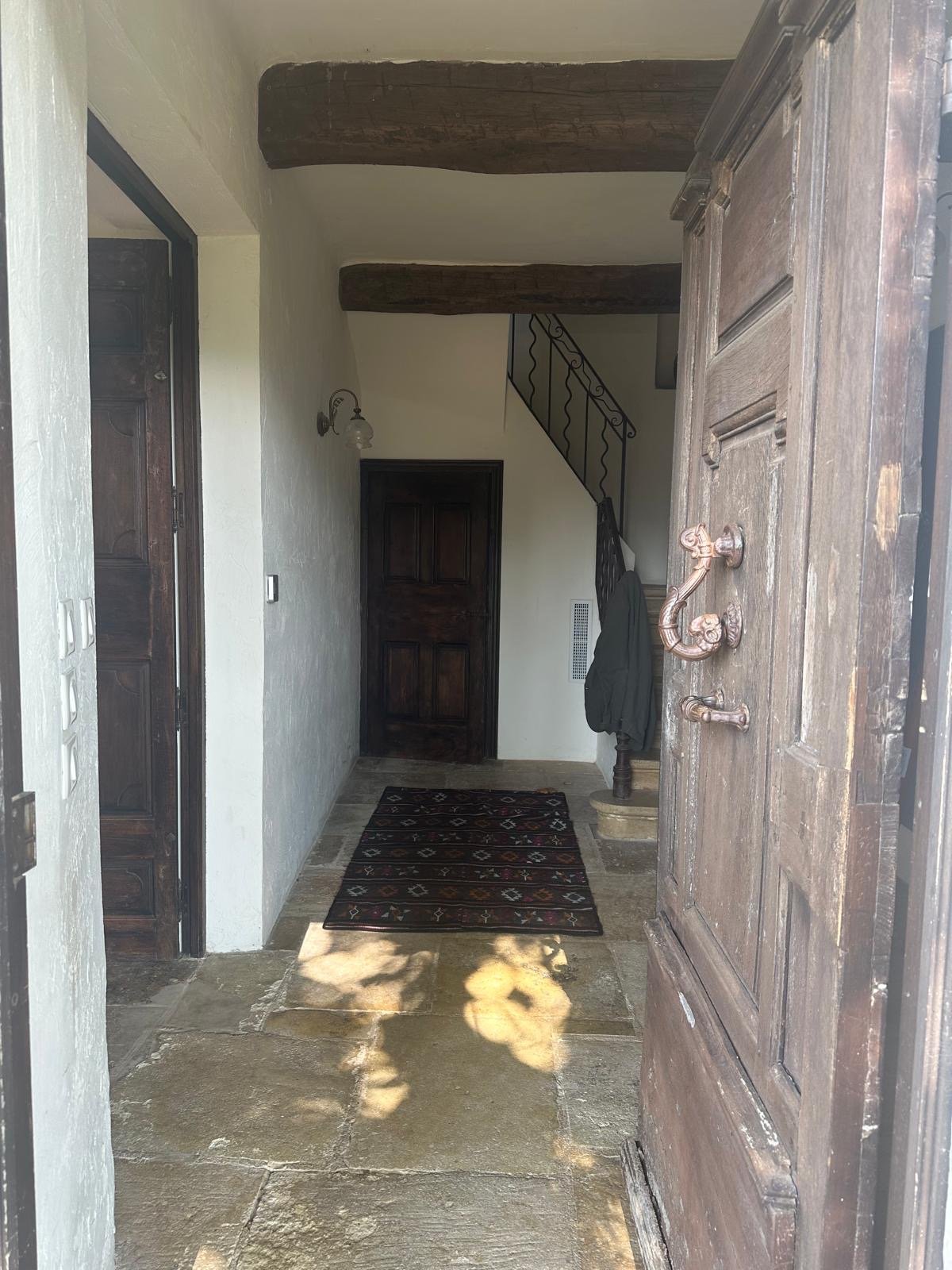

Entrance Hall:
Before
Original flagstone flooring, substantial timber doors and beautiful hand-forged metalwork on the staircase provided a strong architectural foundation. However, years of neutral decorating had muted its impact. The space felt dark and unwelcoming.
After
Today, the entrance hall sets the tone for the entire French Farmhouse interior design scheme. Inspired by the hand-forged metalwork found throughout southern France, Spain and Morocco, the team developed a layered design narrative rooted in local craftsmanship and Mediterranean culture. The original wooden door was restored and revarnished. The Palefire Studio light, in the client’s favourite colour, captures the look and feel of the work of the school of artists displayed at nearby Foundation Maeght in Nice.
A hand-painted scenic wall treatment in the niche on the stairs, draws the eye and references the surrounding landscape.
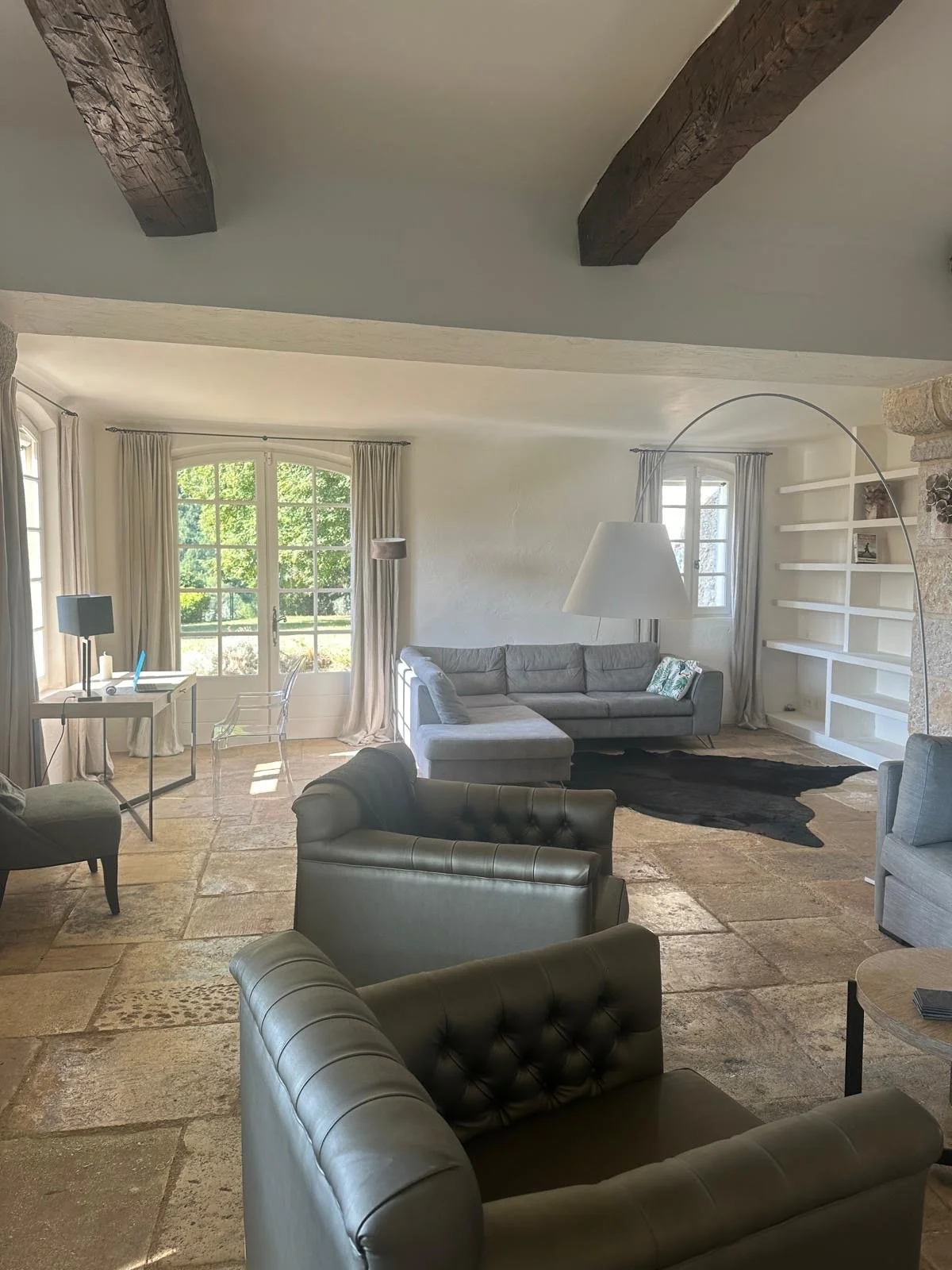
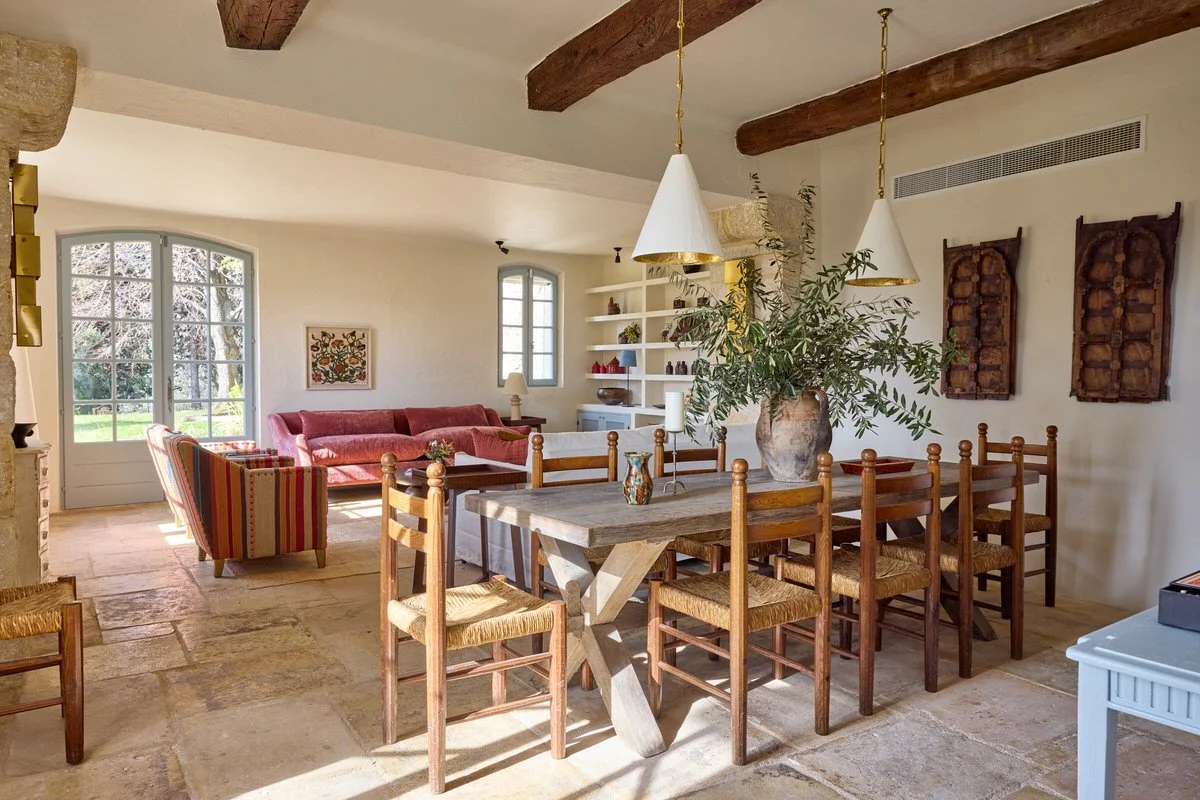

Open Plan Living Space:
Before
Although the open plan living room benefitted from beautiful original architecture and wonderful natural light, it felt cold and uninspiring. Nothing in the space made you feel welcome, nor encouraged you to linger or relax. The neutral colour palette and fragmented furniture arrangement contributed to a feeling of emptiness.
After
Distinct zones were created to work in harmony whilst maintaining the openness of the room. Carefully selected lighting, artisan-crafted furnishings and layered textures create an deep and interesting narrative. Rich colour and natural materials add warmth and a more relaxed atmosphere. The result is a sociable, welcoming environment that feels both elegant and effortlessly comfortable, now one of our client’s areas. The dining table was re-purposed from the kitchen to provide a useful surface for both entertaining and everyday living.
“The antique French dining chairs have a story of all their own. They had been bought by two separate dealers who, agreeing that few properties would require so many seats, decided to take half each. During our research, we spoke to both dealers and purchased the two half sets and reunited them.” Stephanie Bailey
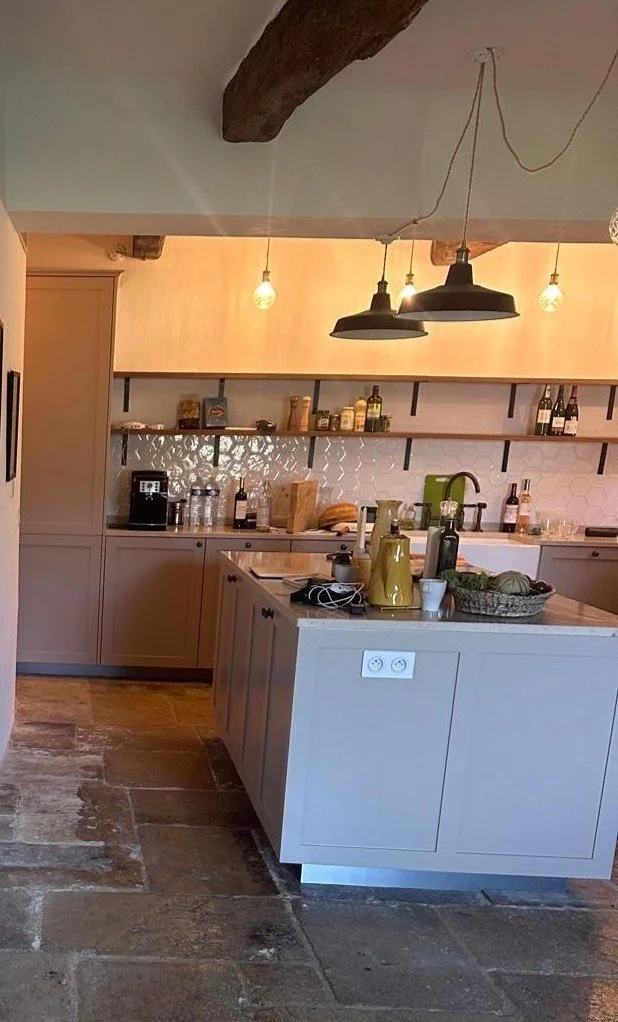

Kitchen:
Before
The existing kitchen was well-made and in good condition, featuring quality cabinetry and craftsmanship. However, the oversized island dominated the room, restricting movement and the options for informal seating. Again, the look and feel was very greige and lacking in personality.
After
The kitchen was redesigned to improve flow and functionality, whilst retaining much of the existing kitchen and appliances. “By remodelling the island we created a more sociable space that encourages gathering in this traditional heart of the home and enables circulation throughout the room.” Decorbuddi designer Jo Miller.
Richer colours, natural materials and hand-painted details connect the kitchen to the wider narrative of the house. The tile border is hand-painted by mural artist Daisy Whitney, with a hard-wearing top-coat applied for longevity.
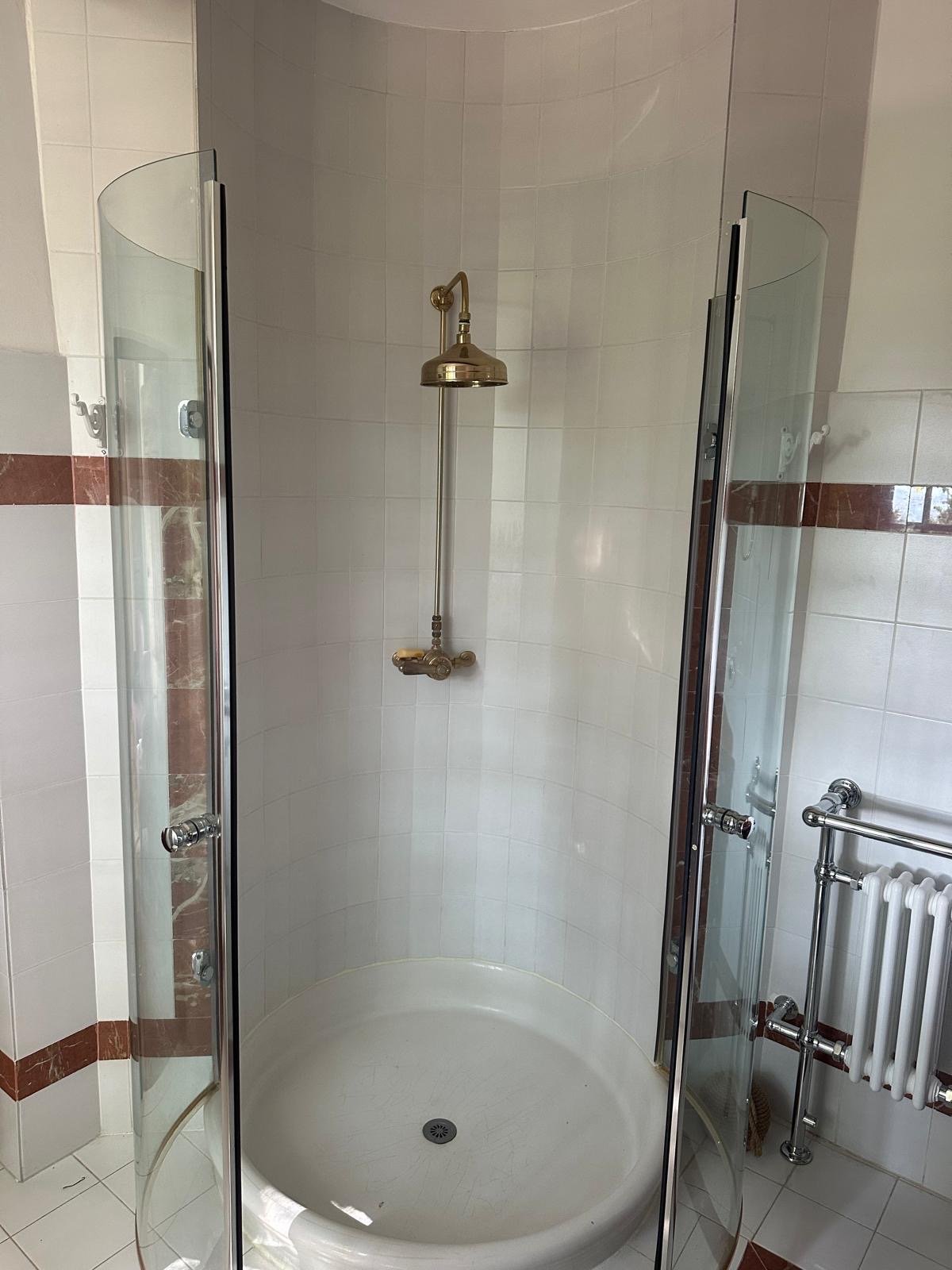

Shower Room
Before
The initial plan was to restore the existing shower in the master bedroom. As is often the case in renovation projects, when the team build started work they discovered that it was beyond repair and that the wall needed replastering.
After
With no way of retaining what was existing, we took the opportunity to create a beautiful, organic, hand-formed walk-in shower that is perfect for the warm climate. Combined with local terracotta floor tiles and Moroccan Zellige tiles, this time in vibrant Royal Green, but has become one of the favourite stand-out design features.
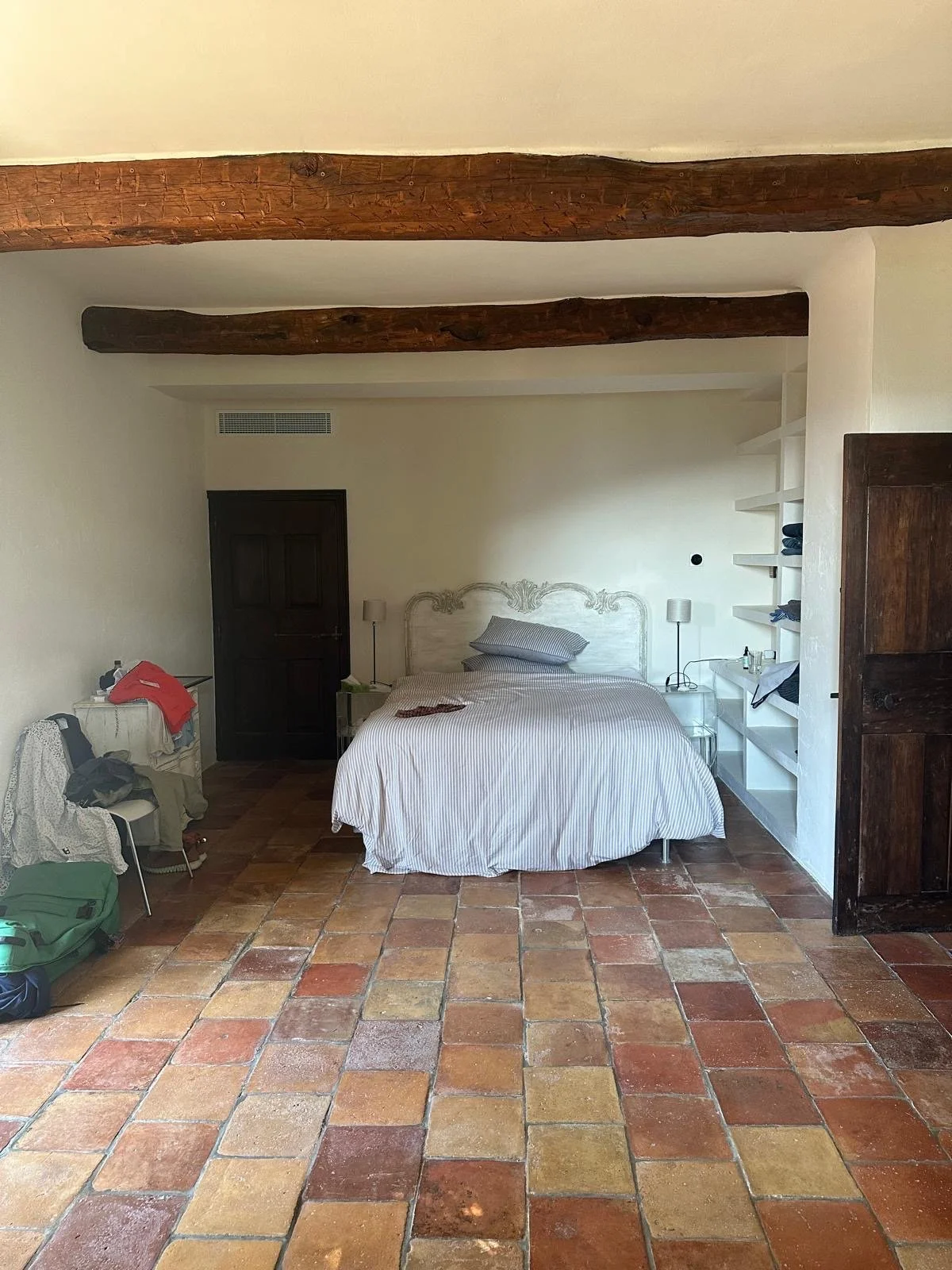


Main Bedroom:
Before
The existing master bedroom had all the ingredients of a beautiful French farmhouse retreat - original terracotta floor tiles, rustic timber ceiling beams, traditional dark wood joinery and generous proportions - but lacked the layered comfort and visual richness of a luxury interior design scheme.
After
Working with the property’s architectural features, and one of our trusted trade partners, Sofas and Stuff, we introduced a beautiful bespoke headboard in a textured terracotta fabric that echoes the colour of the sun-baked earth of the Mediterranean, with triangular motif, reflecting the shapes of the surrounding pine trees and hillside. Layers of natural linen and artisan textiles bring softness and depth, while decorative Moroccan lanterns introduce an element of global craftsmanship.
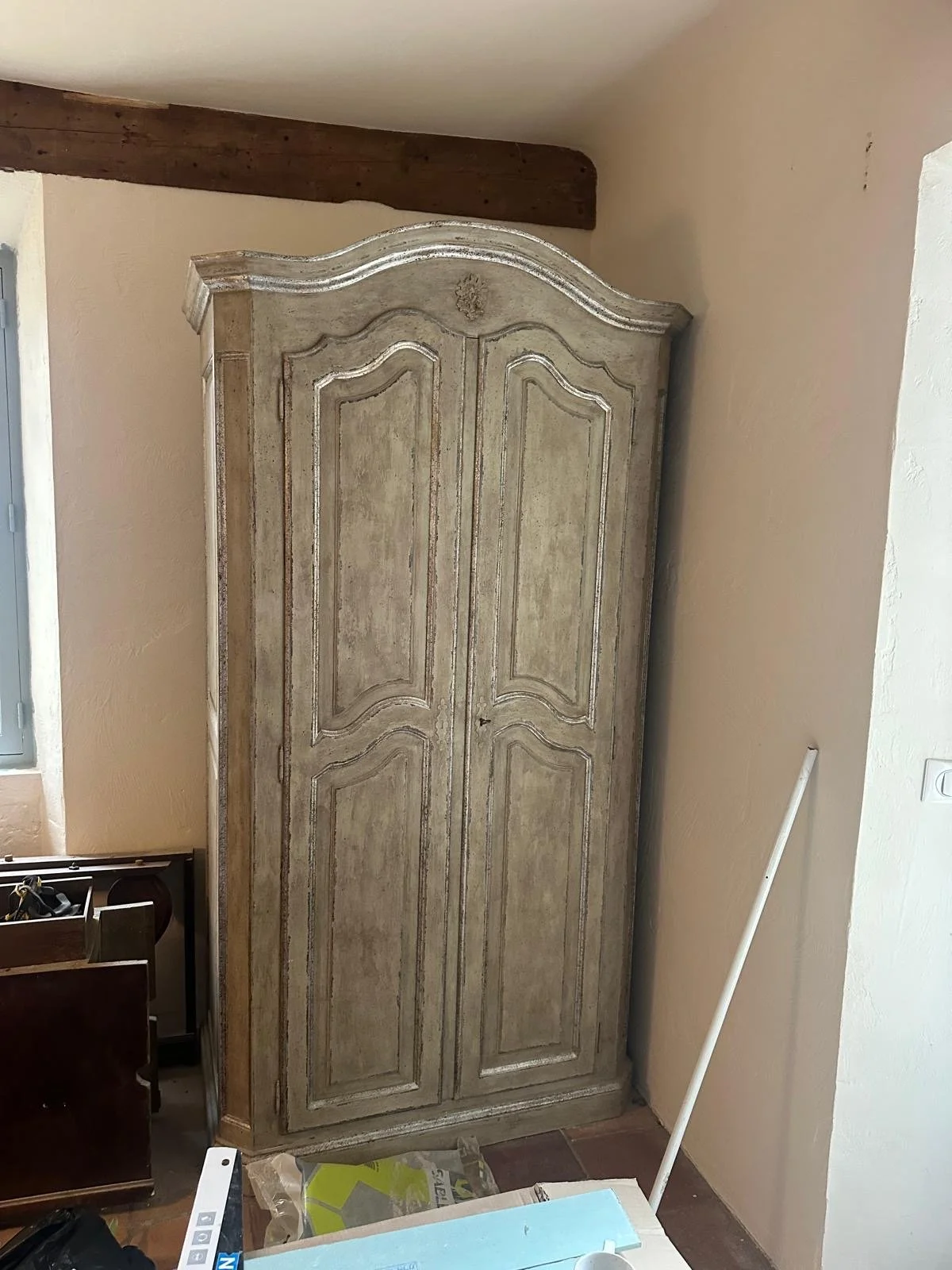


Master Bedroom: Armoire
Before
This antique French armoire had beautiful original character and craftsmanship, but its weathered neutral finish allowed it to blend into the background. While the elegant curved cornice and panelled doors reflected the farmhouse’s heritage, the piece lacked the presence needed to anchor the master bedroom and celebrate the home's rich Provençal setting.
After
Revived in sun-baked terracotta and rich red tones, the armoire became a striking focal point, celebrating the artistic influences, colour palette and craftsmanship that define this French farmhouse renovation. Deep red detailing and hand-painted geometric motifs reference the region’s artistic heritage and nearby Moroccan influences, while retaining the piece’s original patina and charm. The result is a joyful, characterful statement that brings colour, authenticity and a sense of place to the room.
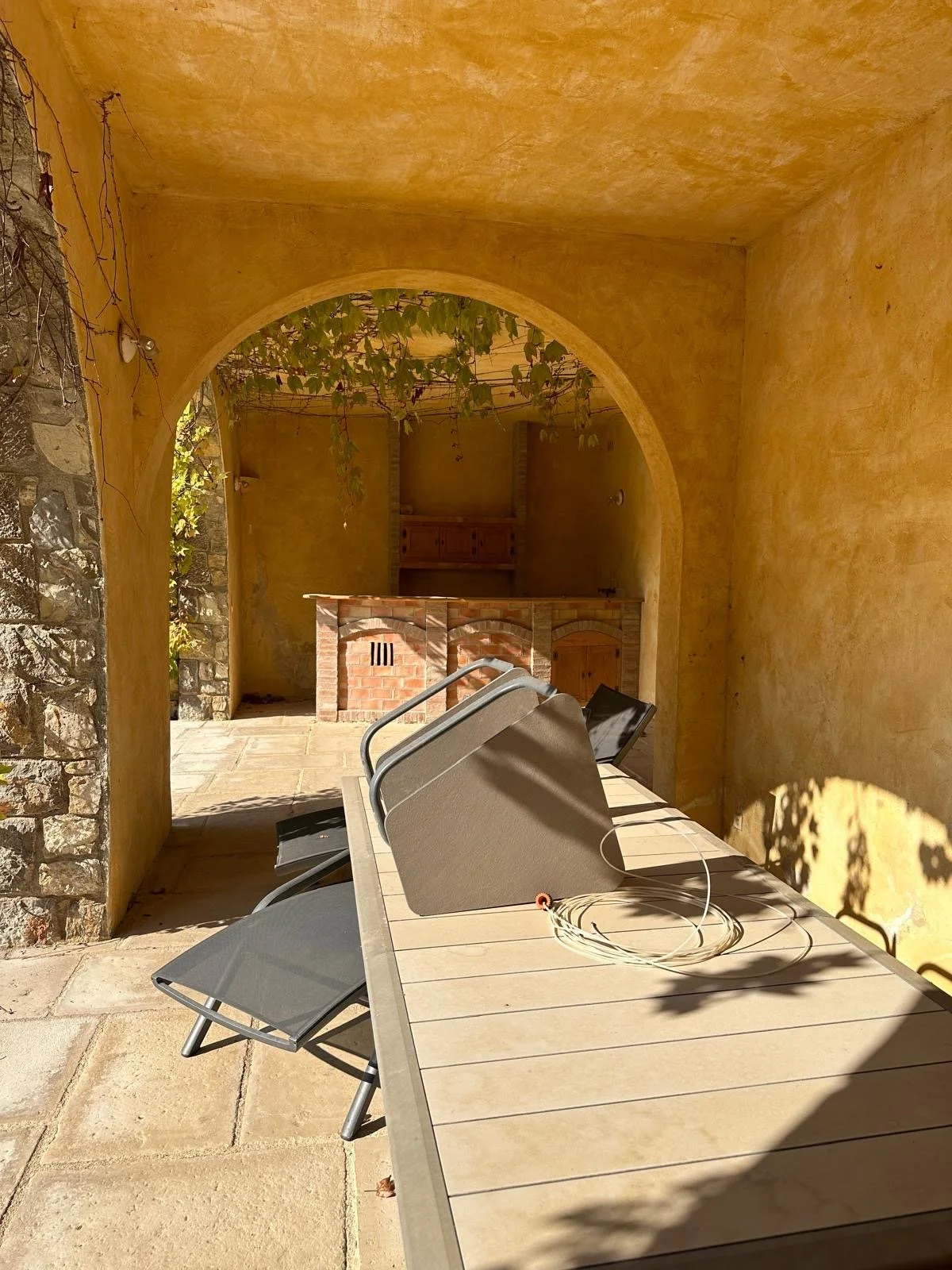


Outdoor Bar & Seating Area
Before
Originally part of the property's historic olive oil farm buildings, the vaulted covered terrace and bar area had enormous character but lacked definition and atmosphere. The beautiful ochre-toned walls, arches and original stonework were largely untouched, while the bar and surrounding spaces felt disconnected from the rest of the outdoor living areas.
After
Drawing on influences from Provence and the wider Mediterranean, the covered terrace was reimagined as a relaxed outdoor lounge and bar. Existing yellow ochre plasterwork was celebrated rather than replaced. Hand-painted decorative details inspired by olive branches, local flora and geometric Mediterranean motifs were layered onto the architecture to create a sense that they had always belonged there. Comfortable rattan seating, rich textiles and warm metallic accents soften the space, transforming the former olive pressing arches into an atmospheric retreat for evening drinks and entertaining. The finished design balances colour, authenticity and a simple elegance that feels entirely at home within this historic French farmhouse.


Outdoor Dining Terrace
Before
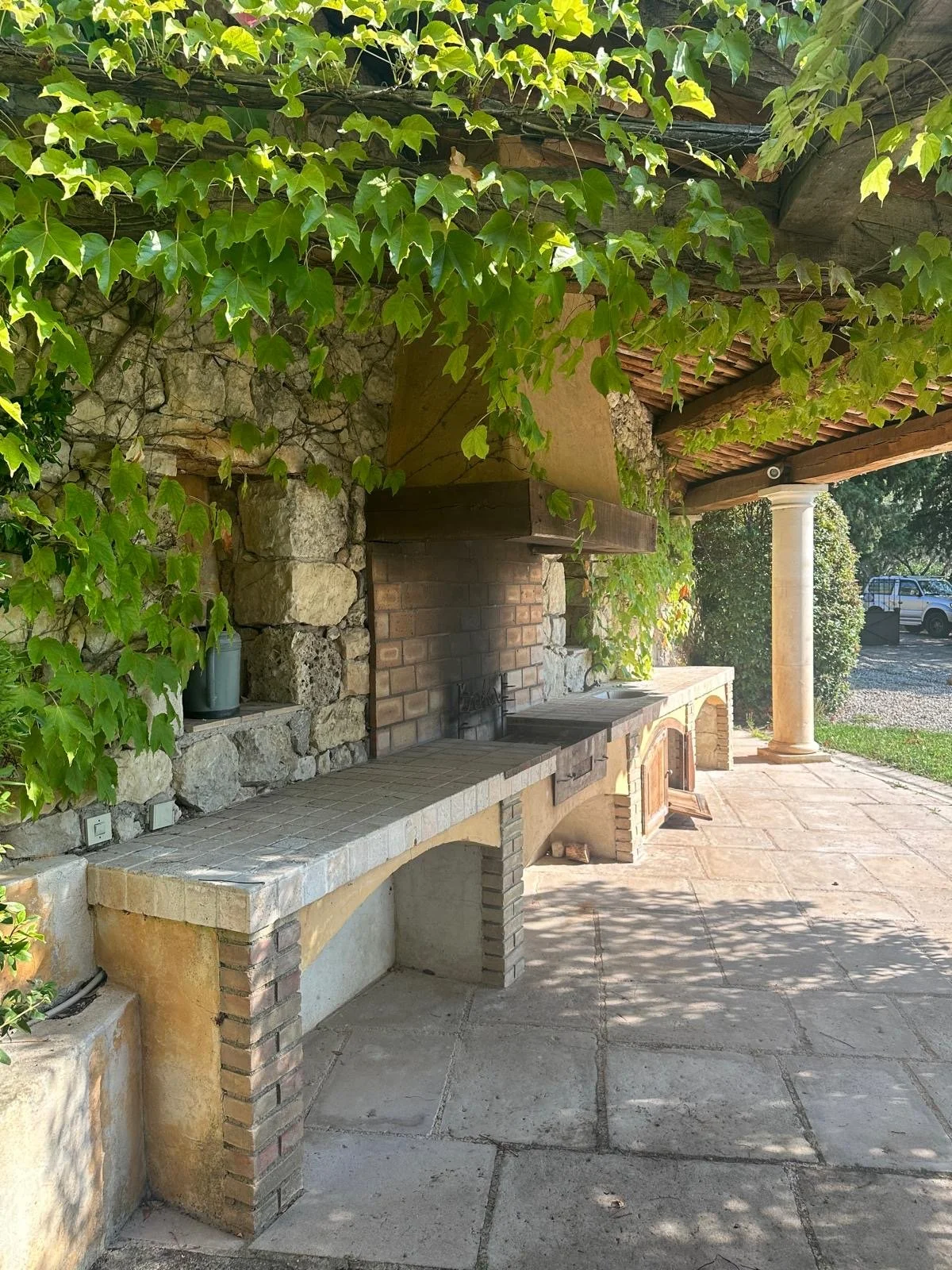
Set beneath a vine-covered pergola, the original outdoor kitchen and dining area had wonderful architectural bones, including the farmhouse's stone walls, traditional outdoor oven and beautiful Provençal setting. However, the space felt functional rather than inviting, with tired finishes and little to encourage long, sociable meals overlooking the surrounding hills.
After
Inspired by the warm earthy colours of Provence and the artistic heritage of the region, the outdoor dining terrace was transformed into a welcoming entertaining space. The existing oven became the heart of the scheme, enhanced with terracotta-toned detailing, bespoke lighting and natural woven furniture. The addition of a generous dining table encourages the relaxed outdoor lifestyle so central to southern France, while retaining the authenticity of the original olive farm architecture. The result is a space designed for gathering, conversation and long lunches beneath the dappled shade of the pergola.
Photography Credit: Kasia Fizer
Frequently Asked Questions About Renovation Projects
How long does a whole house renovation project typically take?
Every renovation project is different, but a whole house renovation can often take anywhere from several months to more than a year, depending on the scale of the work. Factors such as planning approvals, structural alterations, contractor availability and lead times for bespoke items can all affect the programme. We always encourage clients to allow contingency within both their timeline and budget, particularly when renovating older properties where unexpected discoveries can arise once work begins.
Can Decorbuddi help with renovation projects in France?
Yes. We have experience supporting clients with renovation projects in France, including our recent French farmhouse renovation in Provence. Working remotely from the UK, we collaborated closely with the homeowners and local trades to help shape the interiors, source furniture and finishes, and create a home that felt authentic to its setting. We understand the additional challenges that can come with overseas renovations and can help clients navigate the design process with confidence.
Can you work with clients who are based overseas?
Absolutely. Many of our clients live abroad while renovating or furnishing homes in the UK, and we also support clients with overseas properties. Through a combination of video calls, digital presentations, detailed specifications and regular communication, we are able to deliver a highly personal design service regardless of location. Our remote design process is particularly popular with international homeowners, expatriates and those relocating to the UK.
What is included in an interior design service for a renovation project?
Our renovation interior design services are tailored to each project but can include space planning, layout development, kitchen and bathroom design, colour schemes, lighting design, bespoke joinery, furniture specification, window treatments, materials and finishes, and sourcing. We work closely with homeowners to ensure every design decision contributes to a cohesive and practical home that reflects how they want to live.
Should I hire an interior designer before speaking to builders?
Ideally, yes. Engaging an interior designer early in the renovation process can help you make more informed decisions before building work begins. We often help clients explore different layout options, identify priorities, develop realistic budgets and ensure that the finished home functions as beautifully as it looks. Early design input can help avoid costly changes later in the project and provide builders with a much clearer brief.
Can you help with the feasibility stage of a renovation?
Yes. Our feasibility study service is designed specifically for homeowners who are considering a renovation but are not yet ready to move into detailed design. We help assess the potential of a property, explore different options, review likely costs and identify any planning or practical considerations. This early-stage work can provide valuable clarity before significant investments are made.
Do you work on period properties and character homes?
Yes. Many of our projects involve period homes, cottages, farmhouses, listed buildings and other character properties. We believe that successful renovation projects should celebrate a property's history while adapting it for modern living. Whether preserving original features, introducing sympathetic materials or improving the flow of a home, our aim is always to create spaces that feel both timeless and personal.
Can Decorbuddi help coordinate suppliers and contractors during a renovation?
Yes. A successful renovation requires more than great design. It requires careful coordination, clear communication and attention to detail at every stage. We work closely with clients, architects, builders, suppliers and specialist contractors throughout the project, helping to coordinate the design, procurement and installation process and ensuring that every element contributes to the overall vision.
From reviewing plans and sourcing products to coordinating deliveries and supporting on-site decision-making, we help bring clarity and continuity to the process, giving our clients confidence that their project is progressing in line with their objectives.