The Impact of Interior Design on Mental Health and Wellbeing

Photo Credit: Interior designer Ann Jackman
With first-hand expertise from Decorbuddi designer Ann Jackman.
Your home does more than shelter you. It actively shapes how you think, feel, and recover from the demands of daily life. Understanding how interior design affects mental health means moving well beyond choosing paint colours or arranging furniture. It means treating your home as a functional tool for wellbeing.
Key takeaways
Light and layout come first. Natural light and a well-planned floor plan do more for daily mood than any surface finish, and both are measurable.
Clutter is a wellbeing issue, not just a tidiness one. Revealing a home's character and engineering hard-working storage can lift how a client feels before a single new finish goes in.
Place colour by function, do not ban it. Energetic tones belong where you gather and entertain; calmer, desaturated tones where you rest. Keep pattern restrained.
How a home feels matters more than how it looks. There is no single visual formula for wellbeing; the design has to start from the client's memories, habits and aspirations.
Professional, client-centred design is the differentiator. DIY fixes address symptoms; a trained eye diagnoses the causes of a stressful home.
"Interior design can have an enormous impact on how we feel, and this is often at the heart of what we do," says Decorbuddi designer Ann Jackman.
That impact is now well documented. As Dr Lindsay Graham of the Center for the Built Environment at UC Berkeley puts it, "the home is the primary site for the management of mental health, and its design can either facilitate or hinder the recovery from daily stressors."
Environmental psychology reframes the conversation entirely. Rather than asking "does this room look good?", it asks "does this space help you decompress, focus, and feel safe?" Those are meaningfully different questions, and the answers have real consequences for how you experience your home every single day.
And that is where considered design earns its value. The structure of your home, its layout, light, flow, and proportion, is not a backdrop to your life.
It is an active participant in it. The science behind that relationship, particularly the measurable link between natural light and psychological wellbeing, is where this conversation becomes even more compelling.

Photo Credits: Interior design of Victorian Modern Home, designer Jessica Jones, photography Chris Snook Photography.
A Few Words on The Science of Light and the Wellbeing Index
Natural light is one of the most powerful, and most overlooked, tools in designing for wellbeing. Residents living in homes with higher levels of natural light report significantly higher scores on the wellbeing index, according to research from Ohio University. That is not a marginal improvement. It is a measurable shift in how people feel day to day, driven directly by how their home is arranged.
The biological mechanism is straightforward. Natural light regulates your circadian rhythm, the internal clock that governs sleep, hormone release, and mood. When window placement allows morning light to reach the spaces where you spend your first waking hours, your body receives the cue to suppress melatonin and boost cortisol at the right time.
Garden views compound this effect, offering visual depth and a connection to natural cycles that help reduce perceived stress. But when a layout traps you in dim, poorly lit rooms, particularly north-facing interiors with narrow windows, that rhythm falls out of sync. The result is disrupted sleep, lower energy, and a subtle but persistent low mood that is easy to mistake for something else entirely.
The psychological cost of a dark home is real, and it is one of the first things a considered renovation can address. Strategic decisions such as repositioning internal walls to borrow light, enlarging windows, or opening sightlines to an outdoor space can transform how a home feels at a neurological level. And beyond geometry, the shape of the spaces you move through each day has its own emotional weight, which we will explore next.

Photo Credits: Interior design of Victorian House Renovation, designer Sophie Wells, photography Kasia Fiszer Photography.
Geometry and Emotion: Curved vs. Angular Design
The shapes surrounding you are not neutral. They are actively influencing your emotional state, often without you realising it.
This is one of the more fascinating findings within the psychology of interior design: your brain processes geometry as a form of environmental signal, and it responds accordingly.
Research confirms a significant aesthetic preference for curved interiors over angular geometries, with curved spaces consistently associated with more positive emotional induction. The reason goes deeper than personal taste.
Sharp edges and hard, angular forms can subconsciously trigger a low-level threat or alert response in the brain. Your nervous system reads them as potential hazards, keeping you subtly on guard even in your own living room.
Soft curves, by contrast, signal safety. Rounded furniture, arched doorways, and gently curved walls encourage the nervous system to settle, making spaces feel instinctively more welcoming and restful. This is interior architecture working on an emotional level, not just a visual one.
In practice, you do not need to rebuild your home to benefit. Consider introducing curves through:
Furniture choices, such as a rounded sofa or oval dining table that softens a room without structural changes.
Architectural details, such as arched alcoves or a curved kitchen island during a renovation, which add lasting emotional warmth.
Accessories and layout, such as circular mirrors, curved shelving, or a softly arranged rug to counterbalance angular architecture.
These principles connect closely to how natural forms influence our sense of calm, which is precisely where biophilic design enters the conversation.
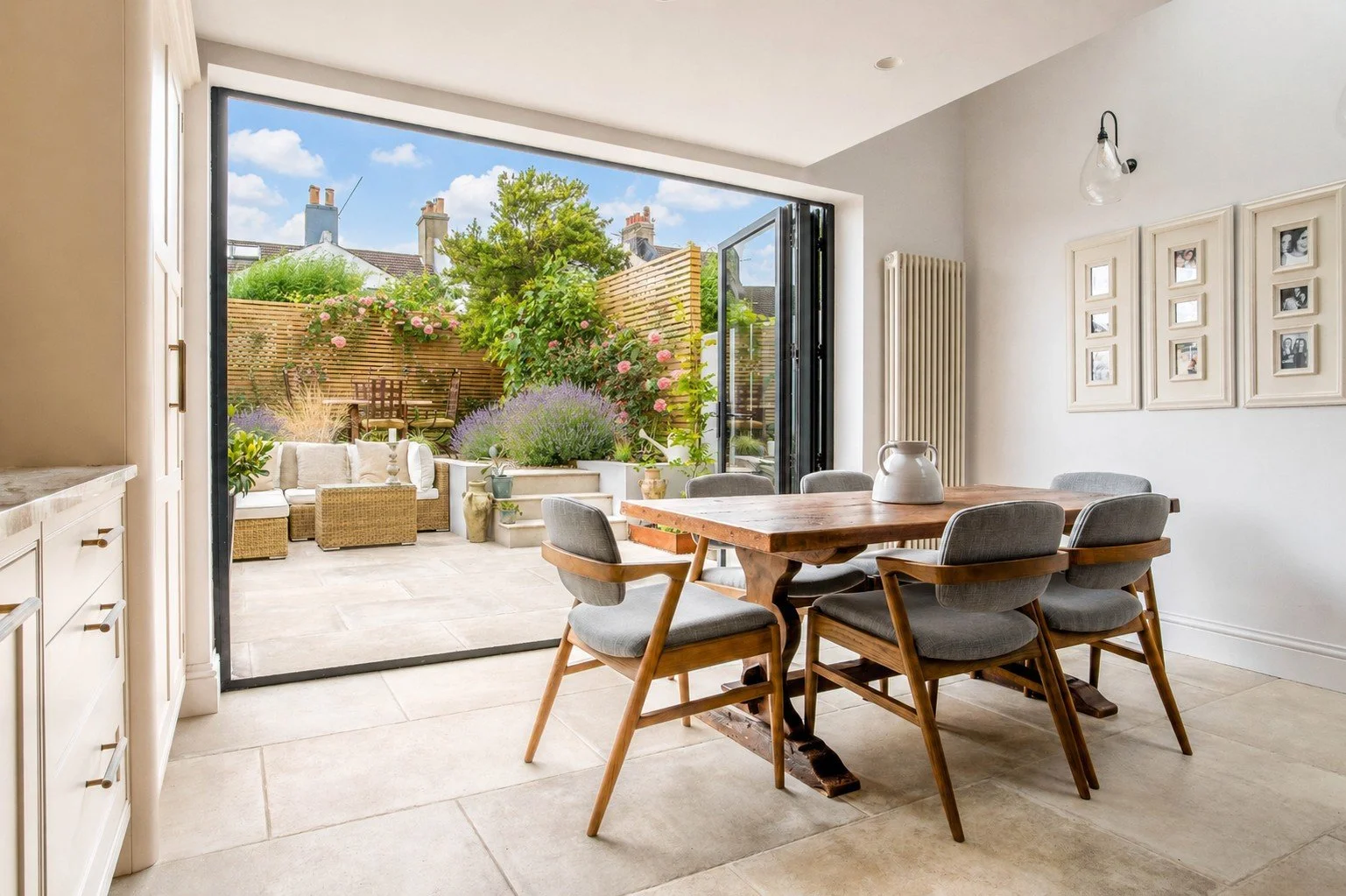
Photo Credits: Interior and Garden Design Sussex, interior design Tracey Duncan, garden design Jo Connolly, photography Limelight Photography.
Designing For More Than Just Houseplants
When your home incorporates genuine connections to the natural world, your nervous system responds by lowering cortisol and easing the mental load of daily life. Research consistently links biophilic elements in residential settings to reduced stress and improved mood regulation.
Visual connection matters enormously here.
A sightline to a garden, a window framing a tree, or even a considered view of planted containers on a terrace gives your brain a micro-recovery moment throughout the day.
This is why garden landscaping deserves to be treated as an extension of your interior living space, not an afterthought. A well-designed outdoor space, integrated visually with your interior, effectively increases the psychological footprint of your home without adding floor area.
Natural materials such as timber, stone, linen and clay carry tactile and visual qualities that synthetic surfaces simply do not replicate. They ground the sensory experience in ways that feel instinctively calming, particularly in high-pressure environments where cognitive demand is already high.
They also tend to regulate temperature more gently, reducing the subconscious irritation of spaces that feel either sterile or artificially controlled.
How your home is arranged around these elements matters just as much as the elements themselves, which is where spatial layout becomes the next critical piece of the wellbeing puzzle.
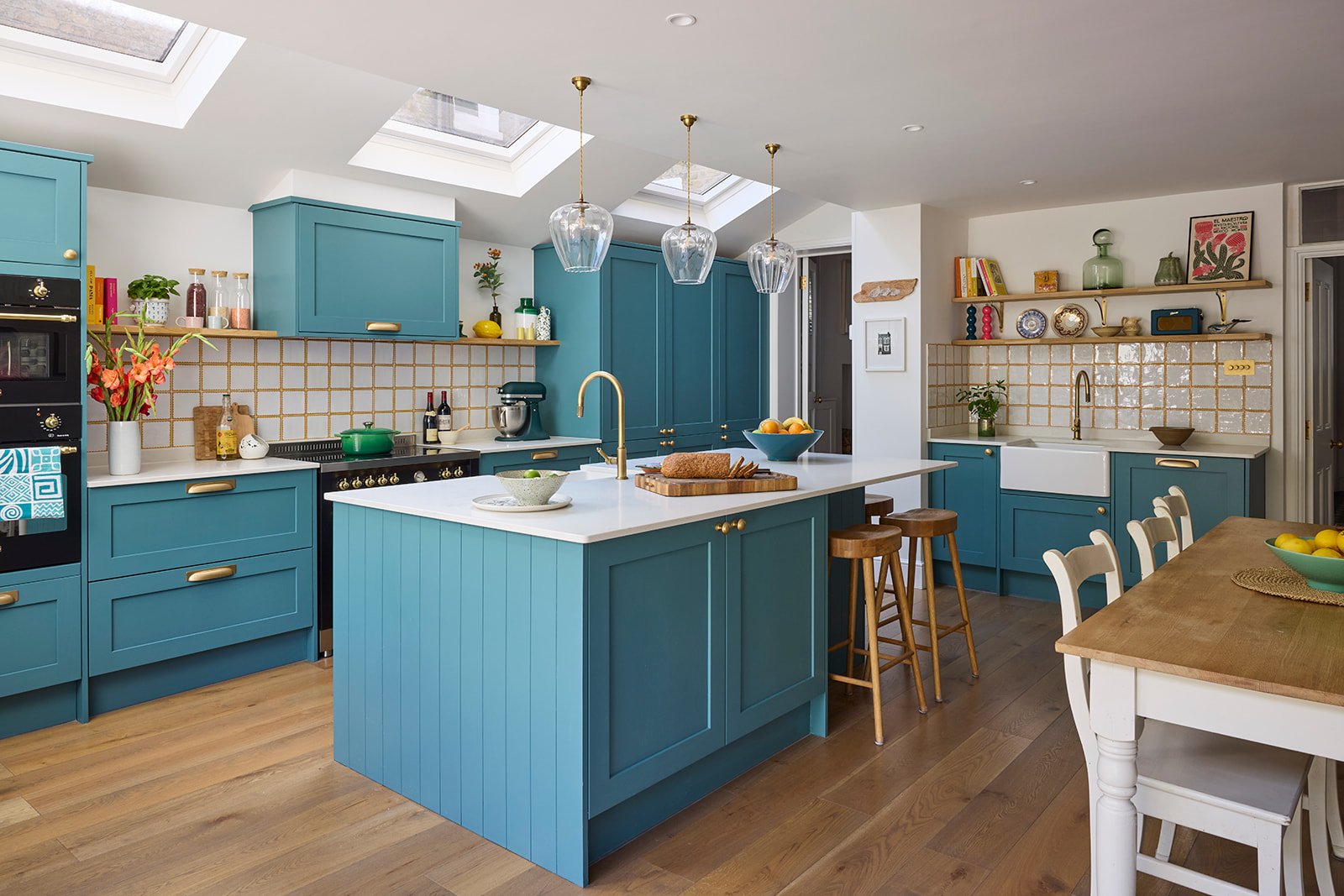
Photo Credits: Interior design of Colourful, Eclectic Interior Design, designer Lesa Bertie, photography Kasia Fiszer Photography.
Spatial Layout and the Burden of Clutter
A poorly planned floor plan does not just inconvenience you. It quietly drains your mental energy every single day. The connection between interior architecture and mental health is well established: when your home forces you to navigate around obstacles, hunt for misplaced items, or move through awkward spaces, your brain registers each friction point as a small stressor.
Poor spatial layout creates cognitive load, and cognitive load erodes your sense of calm before you have even left the house.
Open-plan living has obvious social appeal. Shared space encourages connection, conversation, and a sense of ease.
But the research is more nuanced: without defined zones for retreat, open layouts can feel relentless. People need 'refuge', quieter, bounded spaces where the visual and social stimulation drops away. A well-considered layout offers both: openness where it supports togetherness, and enclosure where it supports rest.
Designing for flow means tracing how you actually move through your home, morning to evening, and removing the friction points.
Where do you drop keys? Where does post accumulate? Where does the family bottleneck at 7am? Answering these questions honestly is the foundation of a layout that genuinely reduces domestic frustration.

Photo Credits: Interior design of Grade II Listed Renovation, lead designer Ann Jackman, photography KT1 Photography.
A real project: a Grade II listed home in Richmond
Ann saw this play out in a Grade II listed family home in Richmond. Over time it had become overwhelmed by clutter, dated finishes and unsympathetic alterations. The client loved the history of the house but could no longer really see or enjoy it.
The first move was not decorative. It was to reveal the building again. Ann cleared the rooms, lifted the carpets to expose the original sitting-room floor, and removed false panelling and other additions that were disguising the house's character.
"Seeing the original structure emerge gave her an immediate lift," Ann says. "She became visibly more energised and excited about her home, because she could finally recognise the qualities that had made her fall in love with it."
The point is worth drawing out: clearing the clutter was not simply preparation for the refurbishment. It removed something that had begun to feel burdensome, and that release was itself the first wellbeing gain, before a single new finish went in. From there Ann restored original features where possible, then introduced colour, furniture, lighting and personal pieces that brought the client genuine pleasure. The result was a home that felt lighter, more personal and much more uplifting to live in, without ever feeling like a museum.
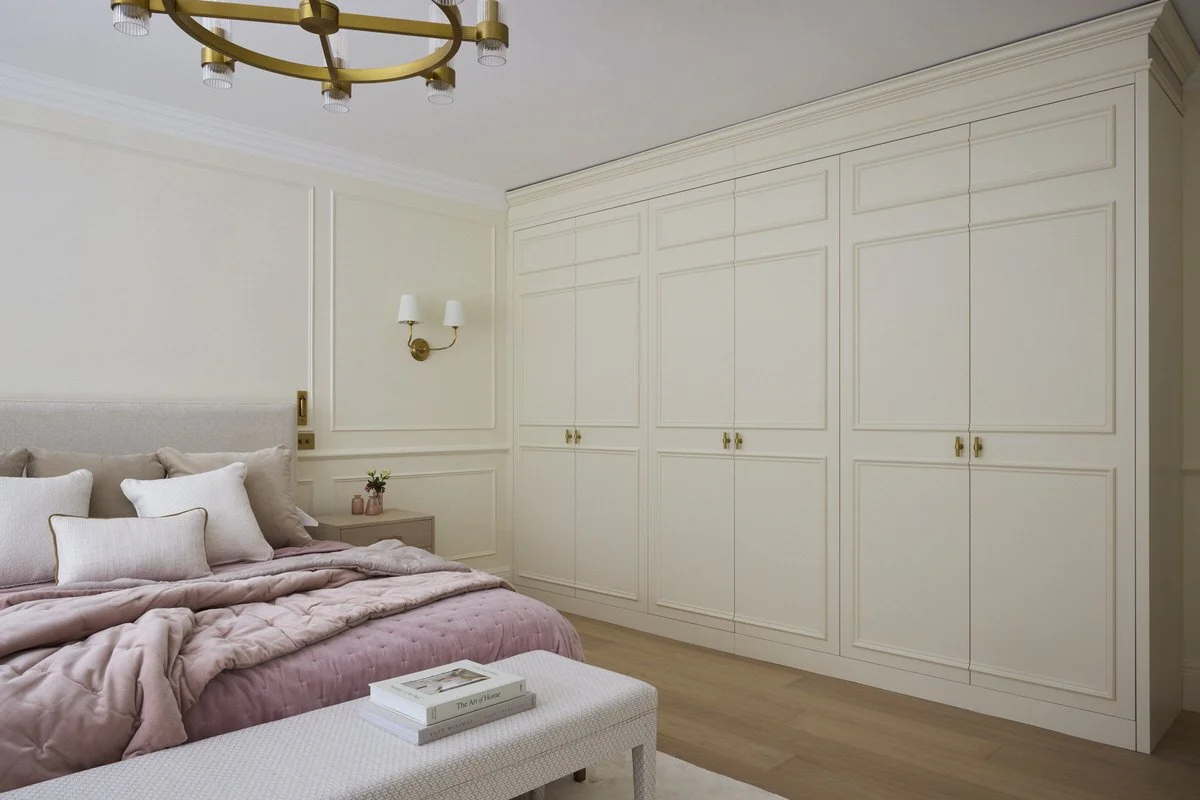
Photo Credits: Interior design of Wentworth Estate Virginia Water, designer Tracy Duncan, photography Kasia Fiszer Photography.
Engineering the retreat
Refuge does not always mean a separate room. Sometimes it is built into how hard the storage works. Ann worked with a company director who lives with ADHD and a genuine love of maximalism, a combination that can easily tip into daily chaos. The brief was to create a calm, ordered home without asking her to suppress her personality.
"One of the key elements of this project was to maximise the storage space so that her natural tendency to be 'messy' could be managed and she didn't end up living in a continuous muddle, surrounded by 'stuff'," Ann explains. "The re-design enables her to retain a constant sense of calm throughout her home much more easily."
The result is a home that resets itself. As Ann describes it, the client is now welcomed back into a far calmer environment after a period of travel or a busy day at work than she had before the refurbishment.
Designer tip: Treat storage as a wellbeing decision, not a practical afterthought. Concealing the everyday clutter of life and giving everything a considered place is often what lets a busy home feel calm, especially for anyone who finds mess a genuine source of stress.
And that is before we even consider colour, which shapes mood in ways that are just as powerful, and just as frequently overlooked.

Photo Credits: Interior design of Loft Conversion 1930s Home, lead designer Stephanie Bailey, photography KT1 Photography.
Colour Theory and Mood Regulation
Colour is one of the most powerful, and most misunderstood, tools in home design for stress reduction. According to Marymount University, carefully chosen colour palettes are essential for mood regulation and can measurably influence how people feel within a specific space. The wrong colour in the wrong room does not just look off. It actively works against you.
Function should drive palette choice. A bedroom calls for colours that signal rest to your nervous system, such as soft muted blues, warm greiges, or dusty sage. A home office, on the other hand, benefits from cooler, slightly more saturated tones that support focus without tipping into agitation. Saturated colours carry more visual energy; muted, desaturated versions of the same hue feel quieter and easier to inhabit for long periods.
Perceived temperature is another often-overlooked factor. Warm tones such as terracotta, amber and soft ochre make a north-facing room feel more inviting, while cool blues and greens can calm a south-facing space that risks feeling overlit and restless. Getting this balance right is less about following trend forecasts and more about understanding how light behaves in your specific home throughout the day.
The harder question is what to do when the colours a client loves are not the obviously restful ones. On the same project, Ann's client loved red, a colour that is not naturally calming. The answer was not to remove it but to place it by function.
"We used these colours confidently in the main living and entertaining spaces, while keeping the bedrooms calmer with soft greens and red used only as an accent," Ann says. "In addition, we used block colours rather than 'busy' patterns throughout."
That is the principle in practice: mood regulation through colour is not about banning the energetic tones someone loves. It is about deciding where they belong. Stimulating colour where you gather and entertain, quieter and more desaturated tones where you rest, and pattern kept restrained so the eye is never overworked.
What typically happens without professional guidance is a set of avoidable missteps: colours that look beautiful on a sample card but flatten a room, or clashing tones that create low-level visual tension you cannot quite name. A professional colour consultation removes that guesswork entirely.
Colour sits alongside layout and biophilic elements as part of a broader design picture, one that is difficult to optimise in isolation, which is precisely where professional input makes the difference.

Photo Credits: Interior design of Edwardian Town House, lead designer Ann Jackman, photography KT1 Photography.
The Role of Professional Design in High-Pressure Lives
Wellbeing-led design is genuinely complex, and that complexity is precisely why DIY approaches so often fall short of delivering lasting change.
Rearranging furniture or repainting walls addresses symptoms, not causes. The psychological needs underpinning a stressful home, such as poor spatial flow, sensory overload, and inadequate light, require a trained eye to diagnose and resolve.
For Ann, the piece most often missed is not technical at all.
"What I rarely see discussed is the difference between how a home looks and how it makes the person living there feel," she says. "Features often present wellbeing as an aesthetic choice: cool colours and minimalism for calm, or pattern, colour and collected objects for energy. But there is no single visual formula for feeling good at home."
The more useful question, she argues, is what a particular client needs in order to feel differently, and the answer is rarely found on a mood board. On one project, the direction only became clear once Ann discovered that some of the client's happiest childhood memories were tied to his grandfather's mid-century house in Austria. That emotional connection gave the design a far more meaningful starting point than any style pulled from a collection of images.
"Client-centred design means taking the time to understand those memories, habits and aspirations," Ann says. "The result should not simply be a home that looks beautiful, but one that supports how the client wants to feel and live. Decorbuddi designers are client-centred. We are encouraged to take time to really get to know our clients, their desires, aspirations and feelings about their home. This is what I believe separates us from other designers."
Collaborative expertise is where professional design earns its real value. Decorbuddi's approach combines the personalised attention of a local designer, someone who understands your home's specific quirks, your daily rhythms, and your priorities, with the collective expertise and buying power of a centralised team.
And bespoke renovation adds more than property value. Done well, it delivers what you might call life value: the compounding daily benefit of a home that actively supports your mental state rather than quietly working against it. That return is difficult to put a number on, but most homeowners feel it immediately.
Decorbuddi's expert consultations offer a practical entry point, structured, flexible, and built around your specific goals, sitting at the intersection of high-end design thinking and accessible, jargon-free guidance. The design decisions that most directly shape your mental health deserve that level of professional consideration.
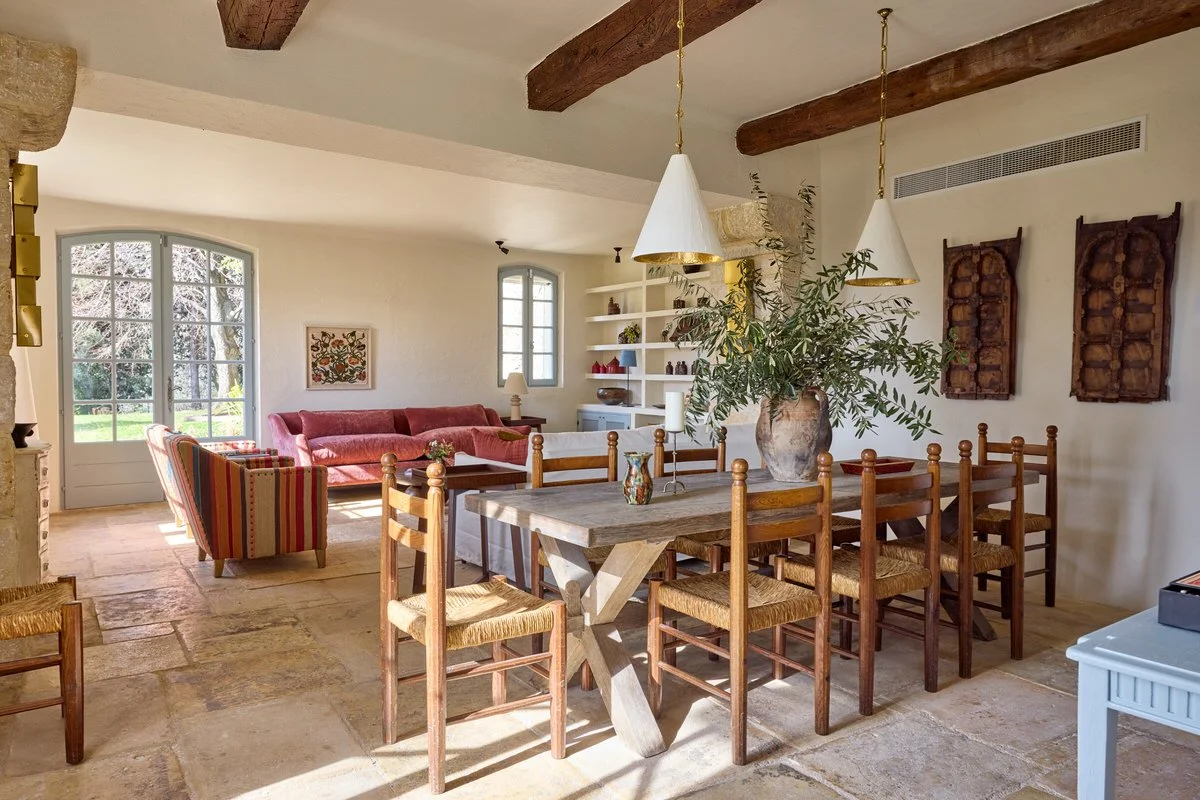
Photo Credits: Interior design of French Farmhouse, design & project Implementation Stephanie Bailey & Jo Miller, photography Kasia Fiszer Photography.
The Bottom Line: Designing for Your Mind
Every design choice in your home is, as House & Garden puts it, inextricably linked to your wellbeing, which means it is also a health choice. That is not a lifestyle claim. It is a practical framework for how you approach your next design decision.
Here is what the evidence points to, distilled into five principles worth acting on:
Prioritise natural light. Maximising daylight through thoughtful layout and window treatment directly supports your mood and energy levels, and measurably improves wellbeing scores.
Introduce curved geometries. Softening angular rooms with arched doorways, rounded furniture, or curved joinery reduces your brain's low-level threat response, creating spaces that feel genuinely restful.
Use biophilic elements and natural materials. Plants, timber, stone, and natural textiles lower cortisol and signal safety to your nervous system, even in small doses.
Invest in professional spatial planning. A well-planned layout reduces the daily cognitive friction that quietly drains your mental reserves. Flow, storage, and proportion matter far more than surface decoration.
Treat your home as a functional wellbeing tool. Not a showroom, not a project, but a space that actively supports how you think, feel, and recover.
Taken together, these are not separate upgrades. They are a coherent design philosophy: one that puts your mental health at the centre of every spatial decision. And the good news is that you do not have to navigate these choices alone, which is exactly where working with the right design partner makes all the difference.
Start Your Wellbeing Transformation
Understanding how your home affects your mental wellbeing is only the beginning. The real difference comes from acting on that knowledge with professional guidance tailored to how you actually live.
Everything covered in this article, from flow and light to materiality and colour, points toward the same conclusion: thoughtful design is not a luxury reserved for grand budgets or blank-canvas properties. It is a practical tool available to any homeowner willing to approach their space differently.
A healthier home begins with informed choices. Book your Get Started consultation with Decorbuddi and take the first practical step toward a space that genuinely supports your wellbeing.